

Systems | Development | Analytics | API | Testing

The European Health Data Space (EHDS): From Regulation to Reality

The European healthcare landscape is undergoing its most significant digital transformation in decades. We are moving away from a fragmented era where health data was locked within the walls of individual hospitals and national borders. In its place, the European Health Data Space (EHDS) is emerging, a unified digital ecosystem designed to give patients control over their data and unleash its potential for research and innovation.

Kong Simplifies Multicloud Cloud Gateways with Managed Redis Cache

As enterprises race to deploy multicloud architectures and Agentic AI, they face a common bottleneck: "state." To govern AI token usage, manage agent-to-agent communication, or optimize performance via caching, API and AI gateways require a persistence layer to synchronize data. We’re excited to share the GA of Managed Redis cache for Kong Dedicated Cloud Gateways (DCGW).

Configuring Kong Dedicated Cloud Gateways with Managed Redis in a Multi-Cloud Environment

A persistent challenge arises as businesses adopt multicloud architectures and agentic AI: the need for state synchronization. API and AI gateways require a robust persistence layer to synchronize data, whether it's for governing AI token usage, facilitating agent-to-agent communication, or boosting performance through caching.

Leveraging the MCP Registry in Kong Konnect for Dynamic Tool Discovery

As enterprises start deploying AI agents into real systems, a new architectural challenge is emerging. Agents need a reliable way to discover tools, services, and capabilities dynamically, instead of relying on hardcoded integrations. This is where the Model Context Protocol (MCP) ecosystem is rapidly evolving. MCP servers expose tools and capabilities that AI agents can use. However, once organizations begin deploying multiple MCP servers across environments, the question becomes clear.

Zend Server vs The Enterprise Web Platform

Zend Server is approaching end of life — so what’s the best path forward for PHP teams? In this video, get clear Zend Server info as we compare Zend Server PHP features with the new Enterprise Web Platform and explain why it’s the safest migration option for modern, enterprise PHP applications.

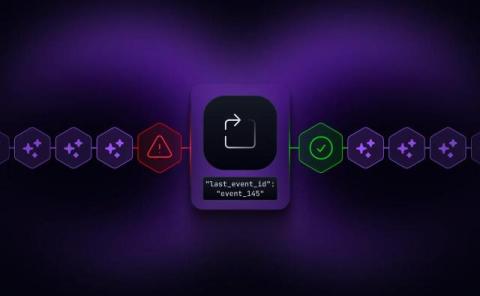
Resume tokens and last-event IDs for LLM streaming: How they work & what they cost to build

When an AI response reaches token 150 and the connection drops, most implementations have one answer: start over. The user re-prompts, you pay for the same tokens twice, and the experience breaks. Resume tokens and last-event IDs are the mechanism that prevents this. They make streams addressable – every message gets an identifier, clients track their position, and reconnections pick up from exactly where they left off. The concept is straightforward.

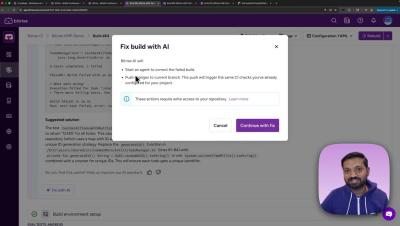
Meet Bitrise AI: 1-minute feature tour

In this fast demo, Naveen Nazimudeen walks you through the Bitrise AI features. Unlike typical agents that only suggest changes, Build Fixer applies the fix for you, then runs a build to validate and opens a PR. Code Reviewer automatically reviews new PRs with zero noise. Bitrise provides a full-stack, vertically integrated mobile DevOps solution that unites the tools, processes and testing frameworks engineering teams need to build best-in-class mobile experiences. Over 400,000 developers use Bitrise’s products: Bitrise CI, Build Cache, Release Management, and Insights.

SwiftUI Previews: Tips to Boost Your Xcode Workflow

SwiftUI Previews show us how our app will look out in the wild and let us make changes in real time, without emulators. But that’s not the full story. The full benefit of SwiftUI Previews lies in declarativeUI, which allows us to dictate the final state we want to achieve and handles all the process stuff itself. This is a game-changer for developers, allowing us to shift our focus from ‘how’ to ‘what’.

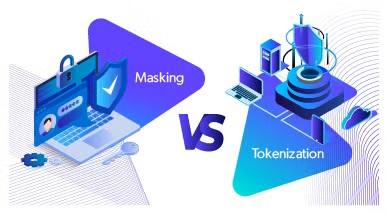
Data Masking vs. Tokenization: Understand the Differences & When to Use What

Data masking vs. tokenization — which should your organization be using to protect sensitive data? The simplest answer: if you need to easily re-access original data, tokenization is preferable. If you need irreversibly transformed data for development or analytics, masking is the superior choice. This is especially true when it comes to using data for artificial intelligence (AI).