Systems | Development | Analytics | API | Testing

Don't Just Monitor SLAs - Validate Them Automatically

Service level agreements (SLAs) are the contractual backbone between customers and technology vendors, outlining expected service availability, performance metrics, and remedies like service credits when service providers fail to meet agreed-upon service levels. This service agreement assures both the technical quality as well as the service quality of the services provided, and underpins the value perspective of the client.

20 years of Rails deployments at RailsConf

Today, we're going to have a little history lesson for those of you who haven't been around since forever, but for those of you who have been around since forever, hopefully this will be a nostalgia fest. We can enjoy some good memories together. From FTP to Kamal, an oral history of deploying Rails apps. Watch the video for the full story!

Top 15 Best Web Service Testing Tools For QA Teams

APIs are the backbone of modern applications. They connect services, share data, and power almost every feature you see in a web or mobile app. As software becomes more complex, QA teams rely on web service testing tools to make sure APIs work as intended. These tools help you validate functionality, performance, and security while speeding up test creation and execution. With so many API testing tools available today, choosing the right one can feel overwhelming.

How To Implement Automation Testing For Your QA Team?

Automation testing is now the default for modern QA teams. Instead of spending hours manually clicking buttons, filling out forms, and triple-checking for bugs (only to miss one in production), testers can write a script once, and the machine takes over. It can mimic the user’s actions, flags issues, and gives teams back hours that they can use for more strategic tasks. When done right, automation testing is a game-changer.

Avoid Cold Starts With Scale-to-Zero Light Sleep

Today, we're thrilled to announce the public preview of Light Sleep. Waking up from Scale-to-Zero is now imperceptible for CPU workloads with sub-200ms cold starts. A few months ago, we announced the first iteration of Scale-to-Zero on the platform to reduce idling costs. With Scale-to-Zero and Autoscaling, apps sleep and wake up automatically on demand based on requests, and scale out horizontally according to your criteria.

How to Use Redis with Python

When it comes to data-driven applications, developers and data engineers are always trying to balance factors such as scalability, speed, flexibility, latency, and availability. In other words, databases and infrastructure are the foundations for well-structured applications: just like bricks are for houses. This article explores Redis' data store features and includes use cases. We'll learn how to use Redis in Python with a step-by-step tutorial. Let's get started!

How to Protect PII in Apache Kafka With Schema Registry and Data Contracts

A data contract is a formal agreement between an upstream component and a downstream component on the structure and semantics of data that’s in motion. In a previous post, I showed how Confluent Schema Registry supports data contracts. By combining data contracts and encryption on streaming workloads, you can shift left the responsibility of data consistency, quality, and security to the producer, allowing the consumer to depend on a trustworthy stream of data.

Beyond RAG: Secure, Agent-Based Access to Enterprise Data

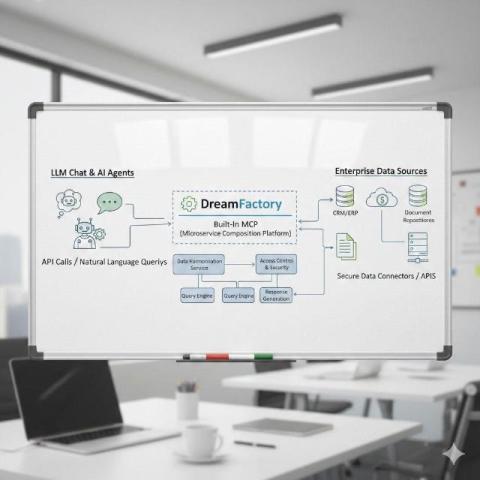
Struggling with secure, real-time enterprise data access? RAG (Retrieval-Augmented Generation) systems are popular but often fall short in handling dynamic data, security, and compliance. Enter agent-based systems - designed to securely connect AI to live databases, APIs, and ERP systems while enforcing strict permissions and audit trails. Key Takeaways: RAG systems lack granular security, real-time updates, and detailed compliance tracking.

Top 20 Ai Testing Tools In 2025 | Free & Open Source

The complexity of software continues to increase as teams adopt microservices, APIs, and cloud-native architectures. Manual testing is no longer able to keep up with the speed of continuous releases. QA teams are dealing with increasing pressure to not only assure software quality but to do so in a shorter cycle time. This is where AI Testing Tools can provide a solution. AI-powered testing takes advantage of machine learning, predictive analytics, and self-healing features.