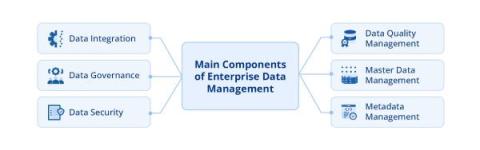
This article covers everything about enterprise data management, including its definition, components, comparison with master data management, benefits, and best practices.
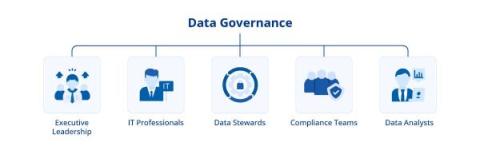
Data governance refers to the strategic management of data within an organization. It involves developing and enforcing policies, procedures, and standards to ensure data is consistently available, accurate, secure, and compliant throughout its lifecycle. At its core, data governance aims to answer questions such as.
In this blog post we are going to be looking at the Throughput Controller. Its name is a little misleading as it does not control the throughput in terms of managing load across the duration of a test, this is handled by elements such as the Constant Throughput Timer.
Picture this: you’re testing online registration forms, and you need to ensure that every input field in the form is working as expected. To do this, you build a manual test for one input field. And then another for a second. And then another for a third…and so on. Thankfully, this scenario isn’t likely to come true, and it’s all thanks to data-driven testing.
In the life sciences industry, where breakthroughs in research and healthcare are fueled by data, data silos can be a big problem. Data silos might be caused by things like legacy systems, departmental divisions, disparate data formats, or lack of interoperability standards. Data silos can manifest at any point in the product lifecycle and make it hard for the right people to access and use the information they need, when they need it.
Executives across various industries are under pressure to reach insights and make decisions quickly. This is driving the importance of streaming data and analytics, which play a crucial role in making better-informed decisions that likely lead to faster, better outcomes.
Explore why Bitrise is the top choice for mobile app developers seeking powerful alternatives to the retiring Visual Studio App Center. Dive into why, and read our migration guide.
No longer a far-off dream found only in science fiction, flying vehicles are taking off alongside the advancement of drones and other aircraft. Soon, we hope to see the regular development of personal flying cars and services like electric air taxis. But, while the Urban Air Mobility (UAM) market is poised for immense growth in the next decade, vehicles zipping about through the air raise obvious safety and security concerns.