As Business Intelligence (BI) tools, data warehousing solutions, and enterprise data and application landscapes have advanced, it’s worth taking the time to rethink that old model, starting with the dichotomy between operational reporting (OR) and strategic analytics. There is a clear difference between operational reporting and BI, but they can and should work together. Companies use one or the other, and if they have both, there is a gap between them.
Snowflake’s Data Cloud is powered by a single engine. From day 1, we have been focusing on consistently evolving and improving this engine to allow existing workloads to run more efficiently and enable new workloads to run on Snowflake. The single engine approach translates into a single experience—from one consistent pricing model to an integrated approach combining performance, security, governance, and the foundation to seamlessly enable cross-region or cross-cloud scenarios.
There’s a function called Enum.map in Elixir that works on multiple collection types, but it's not without its issues. In this post, I will introduce you to a concept from functional programming called a functor. We’ll make a Functor protocol with a function called fmap that will aspire to be a better version of Enum.map. Note: The article is inspired by the Witchcraft library, which we covered in one of our previous posts. But first: what's the problem with Enum.map exactly?
Welcome to The Monthly Sauce! We’re excited to share what we’ve been working on to help your organization achieve quality at speed. You’ll also get the latest insights and resources from our experts.
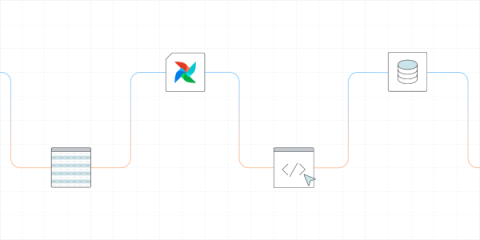
Angles for Oracle simplifies the process of accessing data from Oracle ERPs for reporting and analytical insights; offering seamless integration with cloud data warehouse targets.