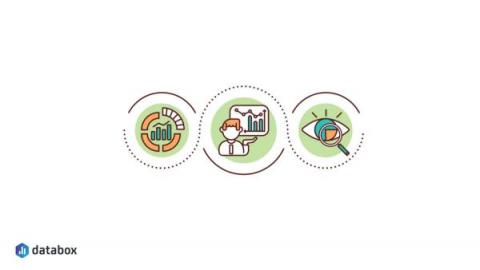
If a tree falls in a forest and there’s no one to hear it… well, it's very hard to use that tree in your corporate decision-making. KPIs (key performance indicators) are the metrics that tell you how well you're performing against certain key strategic targets. Ongoing KPI reporting gives you a clear and consistent view into your company’s performance in the areas that matter most.
The word “trust” is simply not in the cybersecurity solution providers’ vocabulary. They trust no one and nothing. They develop Zero Trust network architectures to protect clients against external attacks, insider threats, and inadvertent errors that could impact security. And they’re always on the lookout for emerging vulnerabilities across internal and external networks. Trust is a luxury they can’t afford to have — or can they?
Quality Assurance (QA) is a typical process for ensuring that the end product of any Software Development Lifecycle (SDLC) corresponds to the overall and scope-agreed-upon objectives. Historically, quality assurance (QA) testing has been introduced rather late in the software development cycle. In a Waterfall process, for example, the software is created and then sent along to the QA team, which provides input and then sends the program back to the development team to be fixed.
Will your software perform well during peak hours? Can it handle the load during sales periods? Is your infrastructure valid if you double your sales by the end of the year? These are just some of the questions that scalability testing can help you answer. Scalability testing evaluates the activity level of your application by upscaling and downscaling the number of users.
A leading company in the healthcare industry has been providing value and care to its clients worldwide for over 20 years. With more than 5,000 employees, this healthcare provider focuses on developing, manufacturing, and distributing continuous glucose monitoring systems for diabetes management.
This blog post is a summary of my talk at the iOS Singapore Conference 2022 about scaling up iOS automated tests using fastlane and other tools.
From the modern application platform perspective, products should allow architects and DevOps teams to support dynamic topologies. That means a multi-platform capability is required but not sufficient. In fact, for several reasons, companies are looking for hybrid deployments to run their applications on several platforms simultaneously. Moreover, the topology should support and adjust for new and continuous architecture changes.
In February 2021, we announced the GA of Kong Konnect, the first cloud native service connectivity platform that gives organizations the flexibility of protecting their API and service traffic while simultaneously taking advantage of 10x ops improvements via the cloud control plane.