Advanced Debugging Techniques in Sauce Labs | Nikolay Advolodkin
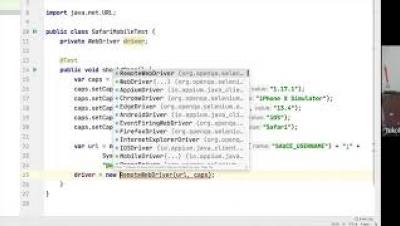
Sauce Labs solutions architect Nikolay Advolodkin continues his series on iOS automation in Safari with a discussion and a demo of some advanced debugging techniques.


This quarter we’ve been working on many improvements that will make your life easier when catching those sneaky bugs, and expand Bugfender’s capabilities with some of the most requested features: We hope you find all these updates useful!
Here we try to explain how to solve any bug or error that your App created with Angular may have and that may be affecting your users without them or yourself knowing it. For this we will use a remote debugger and logging for Angular using the Bugfender library.
One of the most important shifts of the past few years in finance and banking was the movement from primarily branch-based banks to mobile-first banks. While these innovative products simplify the end-user experience, they also bring up more security concerns, since digital channels expose a number of vulnerabilities. These apps deal with sensitive user data, such as private financial or personal information, which means that the prevention of any type of breach is of utmost importance.
Ten years ago I saw a Selenium test that could click on a capital "I" that was one pixel wide. I was not capable of clicking on it myself. Around that time, a lot of people began using phrases like "End to end is further than you think." Simulators and emulators, after all, could not simulate heat, poor memory management, low power, and other problems. Then again, that was ten years ago.
Last week was kind of crazy. Apple announced the public release of iOS14 on the day before triggering a major Twitter-meltdown among developers. Thanks to the quick response of our team, just under 20 hours later we were able to release the new Xcode 12 stack on Bitrise.
By combining custom errors, named functions and Bugfender, you can create a robust error-handling process that allows you to immediately identify the defects of your JavaScript apps. Unhandled JavaScript errors will stop the execution of your script, leaving the application in an undesired state – or, even worse, in an unknown state. So you need a robust error-handling process to avoid unknown errors in your apps. But, why are errors thrown anyway?