Systems | Development | Analytics | API | Testing

Agentic RAG AI: Why It's the Future of BI Insights and Analytics Tools

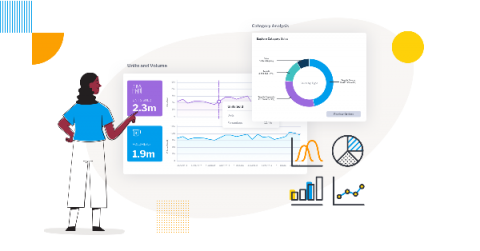
If your BI and analytics tool isn’t powered by Agentic RAG AI, you’re missing out on advanced AI capabilities that enhance efficiency and visibility into data. Whereas agentic AI can work autonomously and without human intervention, RAGI AI combines the best information retrieval methods available with the power of AI. The result is deep knowledge of organizational data that improves over time.

What is Partition Skew Ratio for ETL Data Pipelines and why it matters?

Partition skew ratio is a critical metric for measuring data distribution imbalance across partitions in ETL (Extract, Transform, Load) pipelines. It represents the ratio of the maximum bytes scanned per partition to the average bytes scanned per partition. When this ratio is high, it indicates significant partition skew challenges in data engineering workflows, which can drastically reduce performance.

Getting Started With Selenium Ide

In modern web development, speed and reliability are combined you can deploy features quickly, but without proper testing, bugs might pass through and strike real users. That is where tools like Selenium IDE fit in – they enable you to automate browser interactions without writing a single line of code. As a person who just tried Selenium IDE on a test login form, I was amazed at how simple it is to create repeatable test flows in a matter of a few clicks.

Essential Guide to Effective BDD Tests for Your Development Process

Software development teams need methodologies that enhance collaboration while ensuring quality. Behavior-Driven Development (BDD) has emerged as a powerful approach that bridges the gap between technical and non-technical team members through a shared language of expected behaviors. When implemented correctly, BDD transforms requirements into actionable test cases that serve as living documentation for your software.

The Ultimate Test Plan Tools in Software Testing: A Practical Guide

Quality assurance remains a critical factor in delivering today’s reliable products. Having the right test plan tools at your disposal can dramatically improve testing efficiency, provide clearer visibility into quality metrics, and help teams collaborate more effectively. As organizations continue to adopt agile methodologies and shift-left testing approaches, the tools that support these processes must evolve to meet modern development challenges.

Mastering Gherkin BDD Tools: A Complete Guide to Behavior Driven Development Testing

Modern software development demands efficient testing processes that bridge the gap between technical implementation and business requirements. Today’s development teams need tools that not only automate testing but also create clear documentation that all stakeholders can understand. Gherkin BDD tools offer a powerful foundation, but to truly scale, teams need a way to manage these specifications, track results, and integrate them into their workflows.

Powerful Test Management Tools: 10 Real-World Examples

Efficient test management tools have become essential for organizations seeking to deliver high-quality products while maintaining competitive release cycles. As development methodologies continue to advance, the integration of comprehensive test management tools with automation testing tools has revolutionized how teams approach quality assurance and software testing.

Mastering Test Case Management for Agile and Scalable Software Quality

Whether you're working in Agile, Waterfall, or a hybrid model, the reality is that scattered testing efforts create bottlenecks, missed bugs, and frustrated teams. Manual tracking in spreadsheets leads to version control nightmares. Disconnected tools mean critical test results get lost between systems. And when release deadlines loom, teams often skip testing altogether—a recipe for production disasters.

Quality Testing: When Should Regression Testing Be Performed?

Maintaining application integrity while implementing changes is a continuous challenge for development teams. Quality testing procedures must evolve alongside increasingly complex codebases, with regression testing serving as a critical safeguard against unexpected system failures. By identifying when and how to implement effective regression testing protocols, development teams can significantly enhance their software maintenance practices and deliver more reliable products to end users.