Systems | Development | Analytics | API | Testing

Event Schema Evolution for API Gateways

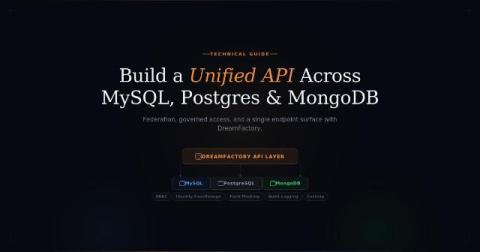
Managing event schema evolution is a key challenge for API gateways, especially in systems relying on real-time data and microservices. Schema evolution ensures that updates to data structures remain compatible with existing integrations, preventing issues like service outages or data corruption. The article explores methods to handle schema changes effectively and highlights DreamFactory’s automated solution.

The Story Behind Forecasts: Why We're Rebuilding It (and What We're Learning)

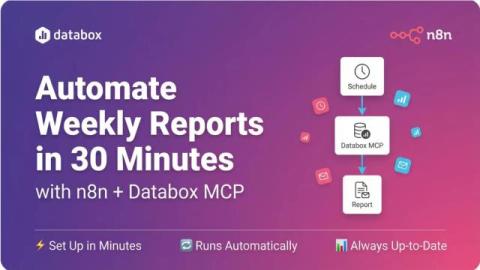
When I took over the forecasting feature at Databox, one thing was clear: users weren’t adopting it the way we’d hoped. To change that, we made several improvements based on user feedback. We added support for seasonality and holidays. Introduced a confidence score to help teams understand how reliable their projections were. And made it possible to save forecasts for future comparison. Each update made the feature more powerful, but even with all those changes, adoption barely moved.

Confluent appoints Stephen Deasy as Chief Technology Officer

Confluent announces Stephen Deasy as its Chief Technology Officer. Stephen will guide how Confluent builds and scales its platform, leading the engineering team's vision, strategy, and day-to-day execution. He'll focus on advancing Confluent's data streaming platform to power more AI and real-time intelligence at global scale.

Is Database Subsetting Enough? How to Avoid Test Data Risks and Slowdowns

Many organizations turn to database subsetting for various reasons. For one, cloning entire terabyte datasets could bankrupt your cloud budget. And masked data could leave your teams fumbling with unrealistic test scenarios. Why wouldn't you just grab the data you need? Sometimes, it really is that straightforward. For certain use cases — like lightweight testing scenarios, proof-of-concepts, or applications with simple data structures — subsetting delivers exactly what it promises.

From Data to Decisions: How AI-Powered Analytics Speeds Up Business Impact

Most organizations are swimming in data, but still struggle to turn it into clear decisions. AI-powered analytics bridges that gap by automating routine analysis, surfacing hidden insights, and making data accessible to everyone through natural language. Instead of just looking at what happened, teams can understand why it happened and what to do next. The result is faster, smarter decision-making and a stronger competitive edge. Provide your users with the latest AI-powered analytics features.

Unlocking API Analytics for Product Managers

Meet Emily. She’s an API product manager at ACME, Inc., an ecommerce company that runs on dozens of APIs. One morning, her team lead asks a simple question: “Who’s our top API consumer, and which of your APIs are causing the most issues right now?” For Emily, that’s not a simple question at all. She doesn’t have direct access to these insights. Instead, she has to reach out to the engineering team.

What Is Random Testing In Software Testing?

Software testing is so crucial in the SDLC. People use many types of testing like API testing, integration testing, unit testing, and so on to check the quality of the software and detect bugs. But one test which people don’t care about is random testing, though it plays a vital role in ensuring software reliability. In this blog, let’s see what random testing is, why you need to perform it, its types, and also how to perform it effectively.

RAG for SQL Server, MySQL, Postgres - Best Practices for Secure AI + Database Integration

Retrieval-Augmented Generation (RAG) lets LLMs deliver current, context-rich answers by fetching live data—customer records, knowledge articles, metrics—from SQL Server, MySQL, and PostgreSQL. Reports suggest RAG can boost answer accuracy dramatically (in some cases up to 90%), making it compelling for BI, support, and operations. The challenge: enabling on-the-fly retrieval without opening security, compliance, or scalability risks. Executive takeaway: Don’t let LLMs write SQL.