Systems | Development | Analytics | API | Testing

How to Connect ThoughtSpot to Amazon Redshift Serverless

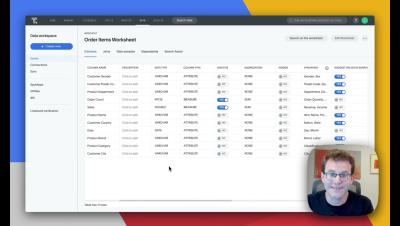
Many businesses rely on Amazon Redshift Serverless for their cloud data warehouse and ThoughtSpot to derive insights from the data stored within. For this blog, I’m going to show you how to create a connection between Amazon Redshift Serverless and ThoughtSpot. It’s easy to connect Redshift with ThoughtSpot whether you have it running as a cluster which you have provisioned, or serverless.

Interview With AI Specialist & CEO Wayne Chung

For the next instalment in our series of interviews asking leading technology specialists about their achievements in their field, we’ve welcomed Wayne Chung, CEO and Co-Founder of GOFA International. Wayne is also the Founder of The Coop Idea and Frogswell, two consumer tech companies that in just their first decade, have amassed over 100USD million in sales.

How to automate delivering Unity apps to testers with CI/CD

TL;DR: It’s critical to deliver the latest builds of your Unity game to testers and stakeholders. You can automate this process by setting up a Codemagic CI/CD pipeline and either using public Codemagic dashboards to access build artifacts or setting up notifications in Discord with links to builds and release notes. Let’s see how we can use automation tools to share our game builds with QA testers and stakeholders!

4 common Android DevOps challenges and how to solve them

​​The term “DevOps” has been thrown around a lot in the software development world. AWS describes it as a combination of philosophies, practices, and tools that help deliver apps and services effectively and efficiently. ‍Mobile DevOps falls under that DevOps umbrella, and it requires a different approach because of the agile nature of mobile development. If you narrow it down even further, you’ll arrive at our main topic, Android DevOps.

Modernizing MLOps: Why I Chose Continual

It says something about a company and its people when they drop the process of formulaic job interviews and just let you pitch ideas for the job you want. That’s what happened when I applied to Continual as a Technical Marketing Manager. Five weeks in, I’m pleased to say I’m working on those same ideas, which I’ll detail in a couple minutes.

Cloud pubsub services compared: Azure Web PubSub vs Ably

In this post, I compare two cloud pubsub services: Azure Web PubSub and Ably, to determine which provides the best development experience. The context will be a multi-user pixelart drawing application that I've built with both services. This is not a step-by-step instruction on how to build the entire application. I'll highlight some key features and differences. The GitHub repository for the app has further details and includes CodeTours to guide you through the solution.

How to implement Flutter local notifications to boost user engagement

Improving your app’s user engagement is key to its success. One way to prevent churn and increase interactions in your Flutter app is by using notifications. Push notifications are pop-up messages that are displayed outside the app’s UI. These messages can appear when the app is closed or in the background. Push notifications are used to get users’ attention and communicate information to them.

The Evolution of APIs: From the Cloud Age and Beyond (Part 2)

In our last blog post, we traced the evolution of APIs in the cloud age. The cloud age introduced the idea of an “API economy” — or the business practice of organizations exposing their digital services or information through the controlled use of APIs. While the API economy looks attractive today, we believe it will become even stronger in the future.

Evolution of API Technologies: From the Cloud Age and Beyond

We live in a digital economy where Application Programming Interfaces (APIs) are foundational elements for businesses to operate and grow. As rightly outlined by Gartner, APIs interconnect individual systems that contain data about people, businesses and things, enable transactions, and create new products/services and business models. The popularity of APIs has grown significantly in the last decade or so, but the history of APIs stretches back much further.