We collect the latest Development, Anaytics, API & Testing news from around the globe and deliver it direct to your inbox. One email per week, no spam.
Astera today announced the launch of Centerprise AI, the agentic evolution of its enterprise data management platform. Centerprise AI embeds proprietary agentic harness across the full data management stack, enabling data teams to design, test, and deploy their data assets, warehouses, pipelines, data models, and analytics in a single platform.
Ever since AI-driven analytics burst onto the scene, product leaders have been racing to adopt it. Promoted as a way to stay ahead of the curve, AI analytics bring the promise of streamlined processes, personalized recommendations, and a more efficient user experience. But AI advancements aren’t without pitfalls, chief among them inaccuracies caused by AI hallucinations and pilot projects not making it to production.
AI is at the center of every conversation around operational efficiency, while at the same time being sidelined. In a recent Harvard Business Review Analytic Services survey, only 18% of organizations report that AI is integrated within most of their workflows; twice as many run it as a standalone tool alongside the work. That gap—between AI that assists and AI that operates—is the defining problem of enterprise AI agents.
Maven Central introduced rate limits for high volume users. Bitrise is protecting its users from rate limiting errors on dependency resolution by hosting a repository manager, a sort of pull-through cache, to reduce load on Maven Central and provide faster dependency downloads. This is enabled by default at not additional cost for all Bitrise hosted builds.
Hybrid cloud was meant to simplify IT — but for many organizations, it has done the opposite. As data spreads across on-premises systems, multiple clouds and edge environments, complexity (not flexibility) has become the defining challenge. With AI initiatives now dependent on distributed, high-quality data, this complexity directly impacts performance, governance, and cost. The lack of a unified view and thereby management of data is the biggest issue spurred by complexity.
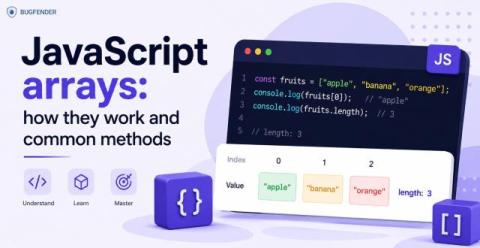
A JavaScript array allows us to group related data like product names, user IDs, log entries, cart items, or API results. Arrays play a vital role in all kinds of user functions, from shopping carts to game scores. However the sheer flexibility of JavaScript arrays can also cause mistakes around mutation, copying, sorting, and searching. Soo we’ve put together this post to show you.
A clinically accurate AI model can still fail inside a hospital. Not because the prediction was wrong. Because the system could not fit the reality of clinical care. The recommendation may arrive too late. The alert may interrupt the wrong workflow. The model may lack explainability. Compliance teams may block deployment before production even begins. That is where many AI-powered CDSS initiatives break down. Hospitals already struggle with alert fatigue from traditional CDS systems.