
Systems | Development | Analytics | API | Testing

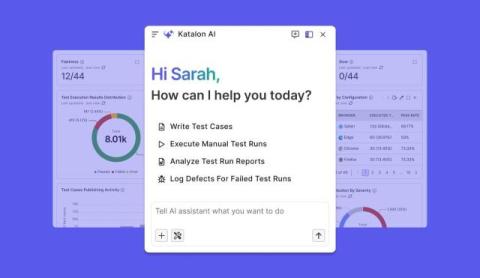
No-Code Test Automation with AI: A Guide for Non-Technical Teams

There's a quiet frustration that lives inside most QA teams, and almost nobody talks about it out loud. You know your product better than anyone. You can walk through a customer journey in your sleep. You spot a broken flow in seconds just by using the app the way a real user would. But the moment someone says "can you just automate that test?" the conversation shifts to a language you never had to learn. Selenium. Locators. Frameworks. Script maintenance. XPath. Java.
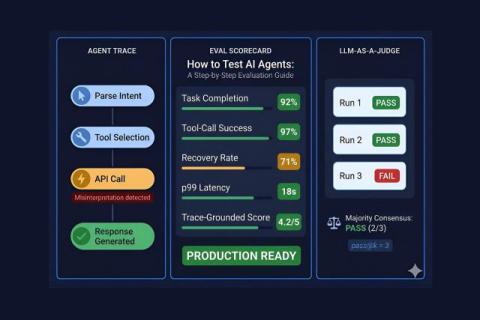
How to Test AI Agents: A Step-by-Step Evaluation Guide

Testing an AI agent means validating more than final outputs — it means auditing every intermediate tool call, reasoning step, and context decision the agent makes across its full execution trace. Unlike traditional software testing, where passing means the right function returned the right value, agent testing must verify that the correct sequence of decisions produced a reliable outcome for a non-deterministic system.

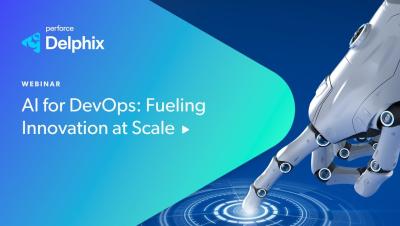
AI for DevOps: Fueling Innovation at Scale | Full DBTA Webinar

AI innovation moves fast, but without compliant data access, even the best ML, AI, and analytics initiatives can stall. In this webinar roundtable, experts from Perforce Delphix, 3T Software Labs, and Redgate explore how organizations can accelerate AI delivery without compromising data privacy, security, or compliance. You’ll hear practical insights and real-world examples on how to remove one of the biggest bottlenecks in modern software and data workflows: access to safe, usable, production-like data.

Address the Long Tail of Legacy Applications with AI Modernization

The pressure to scale AI is on, forcing most organizations to take a serious look at their legacy technology stacks and reinstate failed or postponed modernization projects. AI both requires and enables a modern enterprise. Traditional barriers to modernization—such as time, cost, and business disruption—are now significantly reduced with the introduction of AI modernization tools.

Your AI Pilot is Lying to You: Why Enterprise Tech Needs a Trust Score

Understand how to close the gap between AI experimentation and enterprise production. Shub Agarwal, Founder of the AI Trust Lab at USC and author of Successful AI Product Creation: A Nine-Step Framework, shares his AI product management framework for taking enterprise AI strategy from demo to production, drawing on two decades of product leadership at Amazon and Fortune 50 firms. He breaks down why experimentation must tie directly to business OKRs, the four mindset shifts leaders need to scale AI responsibly, and how the AI Trust Lab is building a benchmark evaluation framework for AI model trust and governance.

API Gateway vs AI Gateway - What Actually Changed?

Kong's AI Gateway applies the same architectural pattern as the API Gateway — now governing LLM, MCP, and agent traffic at the infrastructure layer. Just as API gateways abstracted rate limiting, auth, and caching across microservices, AI gateways do the same for large language models and agents — with token budgets, semantic caching, and semantic routing replacing their REST equivalents. Kong breaks this into three layers: LLM Gateway, MCP Gateway for tool calls, and Agents Gateway for agent-to-agent traffic.#Shorts.

Ep 75 | Why Enterprise AI Still Breaks at Scale with Ravit Jain

As organizations rush to scale AI, many are learning that better models can’t compensate for weak data foundations. AI hype is everywhere, but operational readiness still isn’t. In this episode of The AI Forecast, Paul Muller sits down with Ravit Jain, founder of The Ravit Show and one of the leading voices in the global data and AI community, to explore the trends shaping the future of enterprise AI.

How to Detect and Fix Flaky Tests in Your Mobile CI/CD Pipeline

Every mobile engineering team hits the same wall eventually. A test starts failing — but only sometimes. You re-run the build and it passes. You merge the code. Three days later it fails again. Nobody can reproduce it locally. The test stays red for a week while three engineers waste afternoons chasing it. Then someone adds a comment that says “known flaky, ignore” and that test quietly continues blocking pipelines for the next six months.

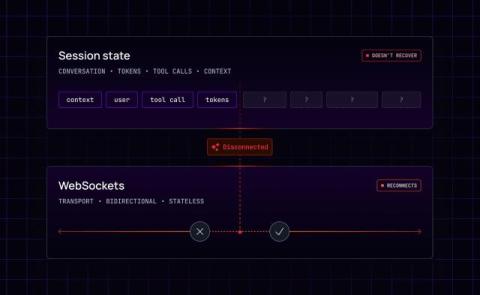
Is WebSockets enough for AI chat?

WebSockets are the right protocol for production AI chat. But that fact doesn’t prevent the failure most teams hit first. An enterprise load balancer closes the idle connection at 60 seconds during a tool execution wait. Your reconnect logic fires in under a second, the agent keeps running server-side, and the client receives nothing from the gap. No tokens, no tool call results, no context. The reconnected socket has no view of what happened while it was down.