Systems | Development | Analytics | API | Testing

The latest News and Information on Software Testing and related technologies.

How to write a user story with great UX in mind

If your typical user story looks like: “As a new user, I want to create an account to have an account,” then you might have a problem. As a recent viral Twitter thread from user evangelist and UX pro Laura Klein pointed out a big issue in the QA community: how to write a user story. Product owners are trying to create and execute as many user stories as possible to define requirements and establish acceptance criteria.

[Webinar] Test Execution at Scale Using Katalon Platform

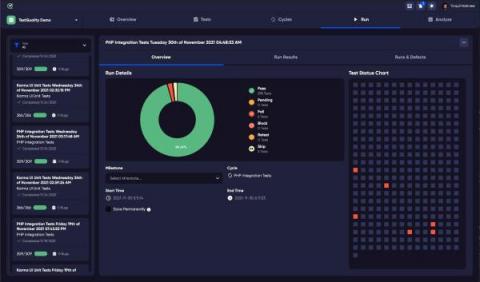
Teams with heavy testing workloads have to run thousands of test scripts in a short timeline. On top of that, they have to execute various types of tests, including web, mobile, API, and desktop, all on one CI/CD pipeline. Optimizing this testing workload is not easy, but it can be achieved and sustainably managed with the right platform. Get ready to learn.

Angular: @ViewChild() and @ContentChildren() decorators

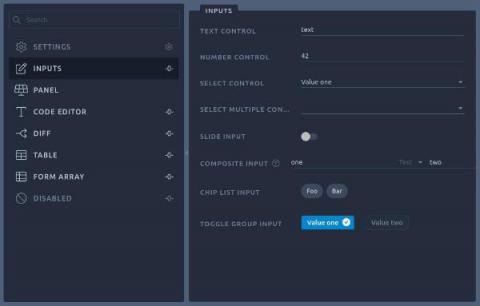
With the release of OctoPerf’s new UI we wanted to create a component that would allow our users to easily edit HTTP request actions. The new UI being heavily inspired by IDEs such as Eclipse or Visual Studio we decided to create a component that behaves likes the project settings panel of IntelliJ: IntelliJ Settings This panel displays a tree on its left part with a search input on top. The content of the left part changes depending on the current selection.

Katalon and AWS | Better Cloud Readiness and Software Quality

ATLANTA, Ga. — June 6, 2022 — Katalon, Inc., the provider of a leading test automation platform, today announced the availability of the Katalon Test Automation Platform through AWS Marketplace as a SaaS contract, enabling customers to buy and immediately start using the test automation, orchestration, and management solution to be agile & innovative to support business requirements and to provide superior customer experience.

What Is "Test Efficacy" and Why Is It Important in Visual Testing?

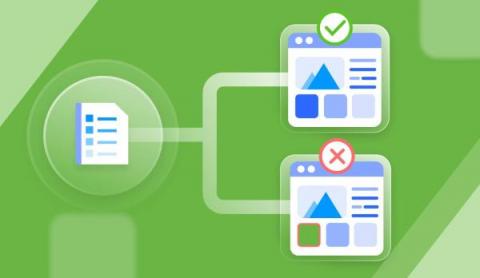
Humans are visual, both on and off-screen. Research shows that 94% of online visitors will form their first opinion on your business based on the design of your website. For e-commerce, 88% of shoppers are less likely to return to a website that gave them an unpleasant experience. These two simple statistics highlight how detrimental it can be to have an inconsistent product UI/UX out in the market.

Artificial Intelligence in Test Automation

When you hear “Artificial Intelligence,” (AI) what do you think of? You might picture advanced humanoid robots or futuristic technology from sci-fi movies. But as it turns out, this “futuristic” technology is already integrated into our lives. It exists in our phones, televisions, and homes to make everyday tasks simpler. When it comes to software testing, AI can be implemented into your testing initiatives to increase efficiency.

BivwAk! - Case study

BivwAk! is the transformation hub for BNP Paribas. Its goal is to bring new services and skillsets at the crossroad of all BNP Paribas entities. It’s in this context that Dino learned about OctoPerf. Dino Dona is the QA lead at BivwAk! He handles all the testing-related activities. Dino is very passionate about testing because it's a constantly evolving space. With new methodologies and tools emerging all the time. We met Dino at the french testing event JFTL.

Guidelines for Writing Effective Test Cases

Writing effective test cases is one of the most critical tasks that each tester must do within the Software Testing Life Cycle(STLC). Test cases are the foundation of every software product analysis. Writing successful test cases, on the other hand, is a method that can be learnt by in-depth application research, which involves building test cases and, most crucially, experience. The method for building successful test cases will be to identify, define, and analyze requirements.

Moving beyond the document in computer systems validation

Over the years, we have seen a steady increase in companies moving away from paper-based validation to electronic-based approaches after the FDA introduced 21 CFR Part 11, which addresses the use and control of electronic signatures and electronic records. When utilized correctly, 21 CFR Part 11 opens the door to numerous potential process and solution improvements in computer systems validation, yet many teams have failed to take full advantage of these improvements.