Mailchimp
Not subscribed to OpsMatters Newsletter


It’s 2023 and with the new year comes an opportunity to drive innovation, growth, and digital transformation with data in the face of ongoing economic turbulence. If Snowflake’s report, How to Win in Today’s Data Economy is any indication, data-driven organizations are poised to emerge as the winners of the year with 77% Data Economy Leaders, which is only 6% of those surveyed, experiencing annual revenue growth versus 36% of Data Economy Laggards, the lowest-performing survey group.
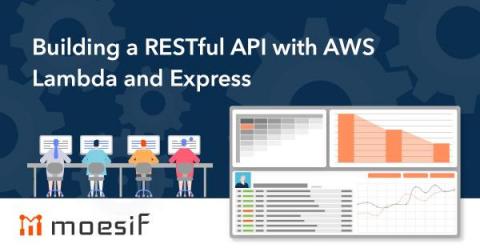
AWS Lambda is a serverless computing service provided by Amazon Web Services (AWS) that allows you to run code without provisioning or managing servers. Node.js is a JavaScript runtime built on Chrome’s V8 JavaScript engine. Together, AWS Lambda and Node.js can be used to create a RESTful API that can be triggered by events such as an HTTP request.
It’s no secret that more and more applications are moving to the cloud. According to the 2022 Flexera State of the Cloud report, 50% of all workloads are in public clouds. In addition, moving from on-premises software to SaaS was a top priority for 42% of survey respondents. According to the BetterCloud’s 2023 State of SaaSOps report, organizations are using 130 SaaS apps on average. Many of these apps are the backbone of your organization.
We’ve established that we’re living in the defining decade of data. Data underpins the seismic technology shifts of the past few years, transforming the way we buy, work, make business decisions, even value our companies. As ThoughtSpot’s co-founder Ajeet Singh said, “Once in a generation, the opportunities to create a legacy increase massively. It happens when truly tectonic shifts happen in the ecosystem. We’re living through one of those times.”
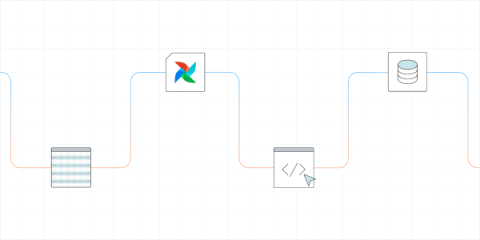
A new Fivetran Airflow provider developed by Astronomer allows data engineers to run Fivetran data syncs more efficiently in Airflow 2.2+