Anodot Named by Forrester in Future of Business Intelligence Report

It’s hard to believe enterprise BI platforms have been around for three decades. In that time, they have served the purpose of collecting and analyzing large amounts of data to help businesses make more informed decisions. But in today’s data-driven economy, analysts struggle to keep up with the myriad of business intelligence reports from traditional BI tools – which fail to effectively and efficiently analyze and interpret data in real-time.

2022 Data Delivery and Consumption Patterns Survey: Highlights and Key Findings

As big data continues to grow exponentially, enterprises are discovering that legacy data environments (e.g. data warehouse or data mart) were never designed to efficiently process and extract insights from the vast volumes of data they generate today. In turn, enterprises are shifting investments away from legacy data environments and searching for future-proof alternatives (e.g., data lakes, data lakehouse, data fabric, or data mesh) to support data-driven, new-generation initiatives.

Snowpark for Python: Bringing Efficiency and Governance to Polyglot ML Pipelines

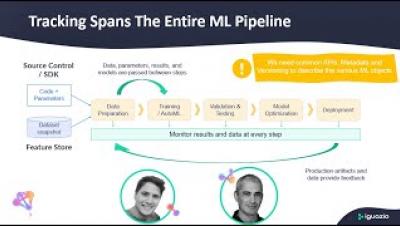
Machine learning (ML), more than any other workflow, has imposed the most stress on modern data architectures. Its success is often contingent on the collaboration of polyglot data teams stitching together SQL- and Python-based pipelines to execute the many steps that take place from data ingestion to ML model inference.

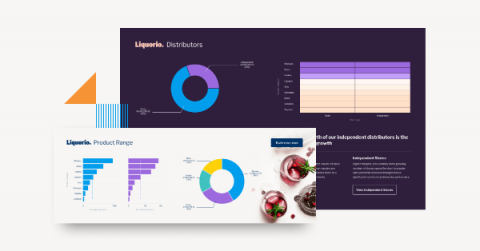
Building a Killer App with White Label BI

Embedded analytics has become a priority for many companies today. It means building data visualizations and business intelligence (BI) features right into public-facing apps. However, some businesses don't like this idea. They don't want to feature a third-party solution in their first-party applications - leading to a lack of data and analytics used.

Top five ways to use self-service analytics for demand generation marketing

As the Director of Demand Gen at ThoughtSpot, I’m responsible for optimizing our campaigns and every customer touchpoint. No biggie, right? I’m part of a lean marketing team at a high-growth company. We’re not in the business of generating leads – we’re about creating real demand for our products.

Yext Relies on Snowflake to Create User-Friendly Search Experiences

Historically, the search functionality on company websites have left much to be desired, forcing users to turn to sites like Google or Bing to find answers to their questions. But the Yext Answers Platform has changed the game. In this episode of “Powered by Snowflake,” Michael Peralta, Product Lead of Analytics at Yext explains how the Yext platform makes it possible for companies to deliver a cutting-edge search experience right on their own websites. The AI-powered platform uses natural language processing that understands the context of a search query, enabling the search engine to deliver meaningful results to people, not just links.