Systems | Development | Analytics | API | Testing

Modern Software Development For Today's Systems & Applications



Q&A: Changing the game for creators: how Substack doubled mobile build speed with Bitrise
When Substack first launched in 2017, the company set out to give writers a better business model, built on subscriptions and direct relationships with readers. Since then, Substack has expanded into multi-format publishing across text, audio, and video, while building powerful tools for community and discovery, for creators, writers, and thinkers of all kinds.

Choosing the Right Data Protection Approach for Your Non-Prod Environments | Full Webinar
Dive into the pros and cons of data masking and synthetic data generation, with real-world examples and practical use cases. In this webinar, Perforce Delphix experts Ilker Taskaya and Hims Pawar show you how to select the right approach based on your specific needs, compliance requirements, and data accessibility challenges.

Create Without Limits with Perforce P4 Version Control
From semiconductor fabs to AAA game studios, Perforce P4 is the version control platform behind the world's most ambitious creative and engineering work. Global industry leaders, including NVIDIA, Samsung, DNEG, Nickelodeon, Sandfall Interactive, Warhorse, and BMW use Perforce P4 to collaborate without boundaries, protect critical IP, and build things the rest of the world relies on. P4 is the version control foundation for.

Serious AI. Built on Process.
"Every great invention takes time to reach its full potential. Just as the light bulb required a system to illuminate the world, artificial intelligence requires the foundation of process to reliably deliver value.".

Governed APIs for Secure AI Data Access | DreamFactory
Quick Takeaway: Governed APIs are better suited for AI workloads, offering enhanced security, better scalability, and compliance-friendly features. They prevent sensitive data exposure and protect databases from being overwhelmed by AI's unpredictable behavior.

Why we built a dedicated SDK for realtime AI streaming
If you've built a conversational AI feature, you know the pattern. Client sends a message, backend calls a model, response streams back over HTTP. SSE mostly, or WebSockets if you need bidirectional. For a single user on a single device, it works well. The trouble is the best AI products right now have moved well past that.
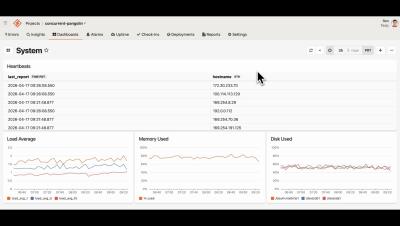
Honeybadger Insights Parameterized Queries
Make your Honeybadger Insights system dashboards dynamic with parameterized widget queries. In this walkthrough, Ben shows how to take a dashboard built from data reported by the Honeybadger CLI agent — load average, memory used, disk used across a fleet of hosts — and filter the whole view down to a single host with one parameter. What you’ll see: One dashboard, many views — no duplicate widgets, just a shareable URL.

DORA Compliance for Open Source Explained
DORA's most surprising requirement may be that financial services organizations are responsible for the security and resilience of every third-party vendor and open source dependency in their stack. If a library you depend on fails, that risk is yours to own. Learn more about DORA compliance and how to stay compliant in this clip from the OpenLogic webinar, "Navigating EU Compliance: Open Source Strategies for Digital Sovereignty and Resilience," which aired in February 2026.

EU Compliance: Open Source Strategies for Sovereignty and Resilience
In today's geopolitical environment, asking 'are we compliant?' is no longer enough. The real question is whether your business can survive if the ground shifts beneath it — through trade wars, embargoes, or regulatory changes that threaten your software supply chain.