Systems | Development | Analytics | API | Testing

Comparing the top AI test automation tools

AI is reshaping test automation fundamentals. Features that once required hours of manual scripting can now adapt automatically to UI changes, generate realistic test data on demand, and help teams predict which tests matter most. For QA engineers evaluating automation platforms, understanding how AI capabilities differ has become essential. This comparison examines SmartBear TestComplete, Tricentis Tosca, and Ranorex through their AI-powered features.

Top 6 automated testing tools for enterprise scalability

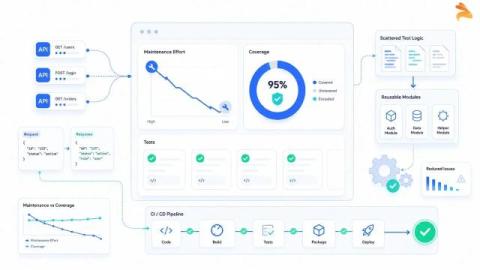
Scaling test automation from hundreds to thousands of tests introduces challenges underestimate. Maintenance overhead compounds as UI changes ripple through test suites. Parallel execution becomes essential but complex to orchestrate. Enterprise applications like SAP, Salesforce, and Oracle demand specialized testing approaches.

Agentic AI Governance: Managing Shadow AI and Risk for Competitive Advantage

While every organization races to deploy AI agents faster, a quieter crisis is compounding in the background, and it will play a large part in determining who survives the agentic era. The numbers are stark. Too many executives see AI governance as a brake on innovation or something to figure out later, after the speed problem is solved. With agentic AI, that's backwards.

Agentic AI Cost Management: Stopping Margin Erosion and the Fragmentation Tax

While every organization races to deploy AI agents faster, finance departments are watching something alarming unfold—and it will play a large part in determining who survives the agentic era. The numbers are stark: 84% of companies report more than 6% gross margin erosion from AI costs. Within that, 26% report erosion of 16% or more. And only 15% of companies can forecast AI costs within ±10% accuracy—the majority miss by 11-25%, and nearly one in four miss by more than 50%.

How to Evaluate an AI Test Case Builder for Your QA Workflow

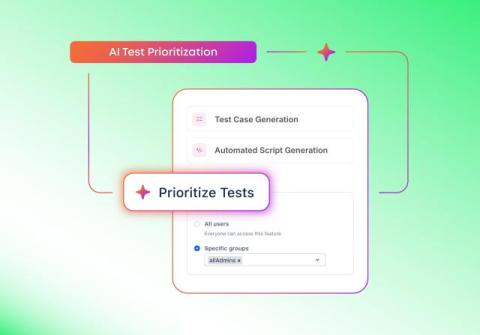
Choosing the right AI test case builder requires evaluating integration depth, not just feature lists. Evaluate AI test case builders based on how they enhance your current workflow rather than how many features they advertise. Your QA team is drowning in test cases. Requirements change daily, releases accelerate weekly, and manual test creation has become the bottleneck everyone acknowledges but nobody has time to fix. An AI test case builder seems like the obvious solution.

AI in Real Estate & PropTech: What Industry Leaders Are Really Saying

Artificial Intelligence in real estate is no longer a future concept or a conference buzzword. It’s already reshaping how properties are leased, managed, valued, and invested in — often quietly, behind the scenes, inside operational workflows. Over the past months, ORIL has been hosting conversations with founders, CEOs, operators, and technology leaders on the Innovation Blueprint podcast, discussing how AI is actually being used in PropTech today. Not hypotheticals. Not hype.

What is Headless BI? A Guide for Leaders Who Need Answers, Not Just Dashboards

You have more data than ever, but getting a simple answer feels impossible. Your data lives in dashboards you can’t question and reports that are outdated the moment they’re published. You’re paying for analytics tools that most of your team never touches. And when you actually need an answer – in a meeting, on a call, right now – you’re told to wait for someone to pull a report.

Refactor Safely with AI: Using MCP and Traffic Replay to Validate Code Changes

So as software engineers using AI coding assistants, we’re quickly learning of a new anti-pattern: Hallucinated Success. You give your agent (e.g. Claude via terminal or various IDE code assistants) the command “refactor the billing controller.” The agent happily complies, churning out nice clean code. The agent even goes so far as to write a new unit test suite that passes at 100%. You integrate it. Your test suites pass. Your production code breaks. Why?

The 8 Best API Documentation Examples | Dreamfactory

Your API documentation is just as important as your API itself. It defines how easy it is for users to learn, understand, and use your open-source or paid product. In this post, DreamFactory highlights eight of the best API documentation examples from well-known tools. These examples can serve as inspiration for creating effective, developer-friendly API documentation. Strong documentation plays a major role in making APIs usable, discoverable, and easy to adopt—especially across teams and systems.