For decades, machine learning engineers have struggled to manage and automate ML pipelines in order to speed up model deployment in real business applications. Similar to how software developers leverage DevOps to increase efficiency and speed up release velocity, MLOps streamlines the ML development lifecycle by delivering automation, enabling collaboration across ML teams and improving the quality of ML models in production while addressing business requirements.
Wire encryption protects data in motion, and Transport Layer Security (TLS) is the most widely used security protocol for wire encryption. TLS provides authentication, privacy and data integrity between applications communicating over a network by encrypting the packets transmitted between endpoints. Users interact with Hadoop clusters via browser or command line tools, while applications use REST APIs or Thrift.
Many data providers who participate in Snowflake Data Marketplace are already using Snowflake Cloud Data Platform as their primary data store, and they can share secure slices of their data via Global Snowflake, Snowflake’s global data sharing feature, with any other Snowflake consumer regardless of which cloud or Snowflake region each is using. But other potential data providers, especially data enrichment companies, are not yet using Snowflake themselves.
We are going to be covering how to deploy a React Native Expo app to Appetize, a platform that lets you run mobile apps in your browser.
Our instrumentation uses built-in extension mechanisms where possible, such as Django’s database instrumentation. But often libraries have no such mechanisms, so we resort to wrapping third party libraries’ functions with our own decorators. For example, we instrument jinja2 ’s Template.render() function with a decorator to measure template rendering time. We value the correctness of our instrumentation a lot so that we do not affect our users’ applications.
When something crashes in an app, fixing the bug is usually quite straightforward. But apps can also be blighted by bugs that don’t result in crashes, and this is where things start to get interesting. To find and fix these bugs, you will require as much information as possible and probably a combination of tools. Let me explain a process we know as ‘bug forensics’, based on a real bug that has impacted one of Bugfender’s customers.
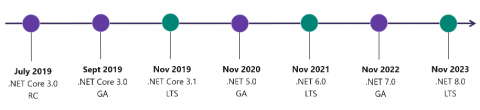
If you’re a developer of .NET supporting enterprise apps developed in the .NET framework, you should know how the .NET 5 would impact your current enterprise app. Moving forward, there will be only one .NET to target macOS, Windows, Linux, iOS, Android, and more. Along with the release, there are new .NET APIs, language features, and runtime capabilities. The look and feel of the code and project files in .NET 5 would be the same, regardless of the type of app being created.
The government's COVID-19 response is a good example of failed leadership from a data perspective. While government officials have access to a huge amount of data to help them make decisions they’ve fundamentally failed to use it to take people on a journey. There’s a huge lesson that businesses can learn from this on how to use data to change behaviors. What we’ve seen is governments responding to the outbreak at a very simplistic level.
Through a new partnership with Kong featuring native integration with Moesif, API providers will now have an enhanced Kong experience—enabling API teams to monitor their APIs and stay informed of issues and behaviors impacting their customers. With user behavior analytics, Kong customers can now track the entire customer journey with Moesif from initial sign up to the first API call and empower engineering and business teams with the product insights needed to experiment and take action.