Systems | Development | Analytics | API | Testing

WSO2 APK + Moesif API Analytics: Drive API Performance and Adoption

WSO2 APK (WSO2 API Platform for Kubernetes) provides a robust, Kubernetes-native platform for managing APIs. It’s purpose-built for cloud-native teams requiring fine-grained control over APIs in modern, distributed environments. With support for microservices architecture, secure ingress, and service discovery, APK solves the infrastructure side of the API equation.

Shifting Left: How Data Contracts Underpin People, Processes, and Technology

The divide between operational and analytical systems has long resulted in data inconsistencies, unreliability, and redundancies. Without a single, unified source of truth, teams interpret information in their own ways—often after the fact. This can lead to downstream data discrepancies, issues, and distrust. Meanwhile, changes to upstream data structures create ripple effects, breaking downstream systems and requiring manual intervention to fix issues.

Why Software Testing in Financial Services is More Critical (and Complex) than Ever

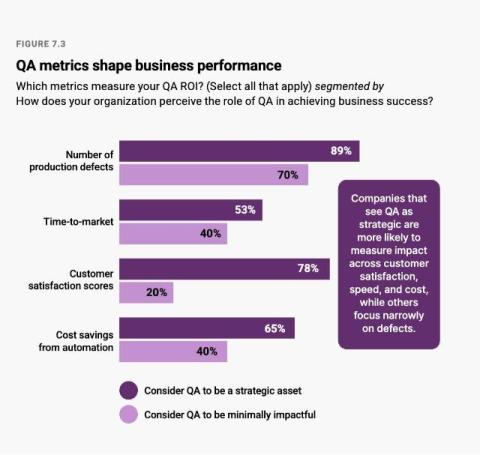
For QA professionals in financial services, the pressure is unlike any other industry. Whether you’re supporting a multinational bank or a regional credit union, one thing remains the same: even the smallest software error can have massive consequences. A glitch in an online payment system could affect thousands of customers. A regression bug in account processing might trigger a compliance breach.

Key Benefits of API Testing for Your Business

APIs are everywhere, quietly powering the apps and services we use daily. They allow seamless communication between software, forming the backbone of modern applications. However, if your APIs fail, your business eventually fails. Therefore, API testing becomes important as it checks for secure, high quality and integrated software.

An Introduction to Testing in Python Flask

So, you've built a Flask application — congratulations! You've crafted routes, connected databases, and perhaps even deployed it to a server. But have you tested it thoroughly? Testing isn't just a checkbox on a developer's to-do list: it's an essential part of building robust and reliable applications. So, in this article, we'll describe why testing is important for Flask applications and how you can effectively implement tests.

Ultimate Guide to API Audit Logging for Compliance

API audit logging is essential for tracking API interactions, securing sensitive data, and meeting compliance standards like GDPR, HIPAA, and PCI DSS. It records who accessed data, what actions were taken, when it happened, and more. Proper logging can reduce data breach risks by up to 70% and improve regulatory compliance by 90%.

Realtime innovation, optimized costs: Ably's solutions for cost efficiency at scale

High-scale, high-frequency messaging and burst activity can lead to significant costs and performance challenges for realtime applications. To help with this, we’ve introduced server-side batching and conflated subscriptions—two powerful optimizations in Ably Pub/Sub that significantly reduce message count, lower bandwidth usage, and optimize processing overhead. These features allow you to process high-frequency updates more efficiently without sacrificing accuracy, reliability, or latency.

Consistently Hallucination-Proof Your LLMs with Automated RAG

AI is quickly transforming the way businesses operate, turning what was once futuristic into everyday reality. However, we're still in the early innings of AI, and there are still several key limitations with AI that organizations should remain aware of to ensure that AI is being leveraged in a safe and productive way.

PII Sanitization Needed for LLMs and Agentic AI is Now Easier to Build

The excitement around large language models (LLMs) and agentic AI is justified. These systems can summarize, generate, reason, and even take actions across APIs — all with minimal human input. However, as enterprises race to integrate LLMs into real-world workflows — especially when those enterprises operate in regulated environments and/or deal in sensitive data — one fundamental question looms large.