Knowing & Serving Your Website Visitors (w/ Gaetano DiNardi)
Gaetano DiNardi shares what many companies get wrong when they analyze website performance and traffic, and steps you can take to better know and serve your visitors.


Following the improvements to Bitrise’s Breakdown Chart, here is a quick walkthrough of how to leverage those Breakdown Chart improvements, including filtering options, exporting data, and more.
Software testing has evolved from an inconvenient ad-hoc process to an integral part of the software development lifecycle. However, while many teams have caught on to the benefits of test automation frameworks, some organizations have yet to scale up and expand their test coverage with cloud-based devices for integration tests.
If you asked anyone at your organization, there’s no question they could name at least one business process that needs streamlining—probably they could name several. That’s the hard truth for leaders looking to gain digital transformation speed in pursuit of critical business goals, like faster customer onboarding and faster time to market.
Didn’t you have the chance to listen to our podcast? Don’t worry. With this article series, you can read the highlights of each episode. In this episode, Maaret Pyhäjärvi is our QA therapist and helps us diagnose and prescribe the symptoms of exploratory testing. Maaret has several significant awards in the testing space. She has delivered hundreds of talks and is a frequent keynote speaker. She lives testing from the inside out and has contributed to the industry for years.
S3 Lake Formation with Apache Iceberg enables ACID compliance, the key to data lake governance and regulatory compliance.
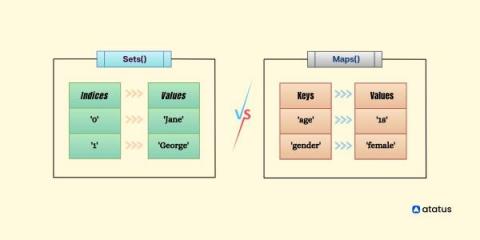
When it comes to picking the right data structure, developers often invest significant time in choosing what should be implemented. A good data structure can simplify data operations, save time, and make code more comprehensive. Collections of data are commonly stored using Objects and Arrays. For storing keys/value pairs, developers use Objects, and for storing indexed lists, they use Arrays. Iterable objects in ECMAScript 2015 presented two new types: Maps and Sets in JavaScript.
Welcome to the third blog post in our series highlighting Snowflake’s data ingestion capabilities, covering the latest on Snowpipe Streaming (currently in public preview) and how streaming ingestion can accelerate data engineering on Snowflake.
Data has become an essential driver for new monetization initiatives in the financial services industry. With the vast amount of data collected from customers, transactions, and market movements, among other sources, this abundance offers tremendous potential for financial institutions to extract valuable insights that can inform business decisions, improve customer service, and create new revenue streams.
Modern businesses demand companies to be fast, agile, customer-focused, innovative, collaborative, and digitally-savvy. Phew, that’s a lot! This poses the question of how can companies meet all these demands? The answer? By switching to microservices which build more scalable, agile, resilient, and diverse systems. When a company meets these demands, they stay competitive, grow their market share, and achieve long-term success.