Systems | Development | Analytics | API | Testing

Hevo vs Fivetran vs Integrate.io: An ETL Tool Comparison

In the competitive market of ETL solutions, platforms like Hevo, Fivetran and Integrate.io are amongst the top contenders. While they all are ETL/ELT platforms, each of them has their own unique set of features to offer. The best ETL tool for your business is the one that is best aligned to your requirements. So how do you decide which tool meets your business needs?

Instrument your Nodejs Applications with Open Source Tools - Part 2

As we mentioned in the previous article, at NodeSource, we are dedicated to observability in our day-to-day, and we know that a great way to extend our reach and interoperability is to include the Opentelemetry framework as a standard in our development flows; because in the end our vision is to achieve high-performance software, and it is what we want to accompany the journey of developers in their Node.js base applications.

6 most useful data visualization principles for analysts

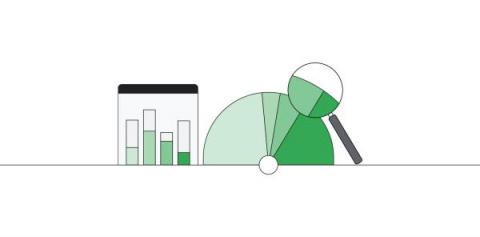
The difference between consuming data and actioning it often comes down to one thing: effective data visualization. Case in point? The John Snow’s famous cholera map. In 1854, John Snow (no, not that one) mapped cholera cases during an outbreak in London. Snow’s simple map uncovered a brand new pattern in the data—the cases all clustered around a shared water pump.

Programming Paradigms Compared: Functional, Procedural, and Object-Oriented

Conceptually, a paradigm is a system of concepts and practices that reflect the current state of our understanding of the field. In general, a programming paradigm refers to a style, way, or classification of programming. Programming languages are used in order to solve problems. A paradigm's difficulty varies according to the language. Paradigms can be used in several programming languages, but a strategy or methodology must be followed.

What test cases should be automated (and which shouldn't)

Developing high-quality apps involves pressure to make tradeoffs on speed, quality, and features to meet deadlines for release. This tension between speed and quality comes to a head with QA: you need a functional product but can’t afford weeks of turnaround time. You can’t skip QA: the true cost of software bugs – the direct cost of mitigating the defects and the indirect cost of decreased consumer trust – is extraordinary.

Data Lakes: The Achilles Heel of the Big Data Movement

Big Data started as a replacement for data warehouses. The Big Data vendors are loath to mention this fact today. But if you were around in the early days of Big Data, one of the central topics discussed was — if you have Big Data do you need a data warehouse? From a marketing standpoint, Big Data was sold as a replacement for a data warehouse. With Big Data, you were free from all that messy stuff that data warehouse architects were doing.

Is Fortify Static Code Analyzer the Right Choice for Your Next SAST Tool?

There are many embedded systems out there, but only a few static code analysis tools that realistically support embedded software developers. The recent acquisition of Micro Focus by OpenText, including the Fortify Static Code Analyzer, reignites the question of which static code analysis tool is best for your embedded software project. Between Fortify and Klocwork, our experts have the answer.

Using Time Series Charts to Explore API Usage

One major reason for digging into API and product analytics is to be able to easily identify trends in the data. Of course, trends can be very tough to see when looking at something like raw API call logs but can be much easier when looking at a chart aimed at easily allowing you to visualize trends. Enter the Time Series chart.