Systems | Development | Analytics | API | Testing

How to use Flink SQL, Streamlit, and Kafka: Part 1

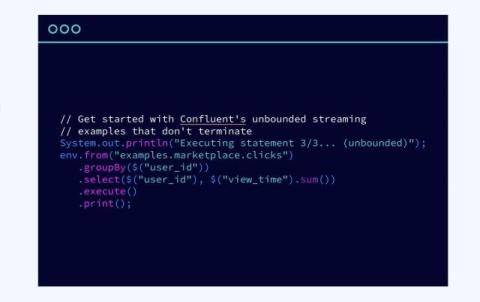
Market data analytics has always been a classic use case for Apache Kafka. However, new technologies have been developed since Kafka was born. Apache Flink has grown in popularity for stateful processing with low latency output. Streamlit, a popular open source component library and deployment platform, has emerged, providing a familiar Python framework for crafting powerful and interactive data visualizations. Acquired by Snowflake in 2022, Streamlit remains agnostic with respect to data sources.

Capital One Shares Insights on Cloud-Native Streams and Governance

Businesses that are best able to leverage data have a significant competitive advantage. This is especially true in financial services, an industry in which leading organizations are in constant competition to develop the most responsive, personalized customer experiences. Often, however, legacy infrastructure, data silos, and batch systems introduce significant technical hurdles.

Best Practices for Your Project Reporting Toolbox

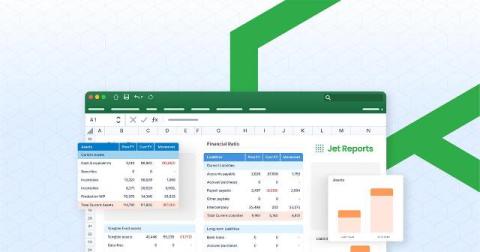
The complexity and variability of project-based businesses represent distinct challenges for finance and accounting teams. Costing, procurement, subcontractor management, and labor combine to create a level of intricacy that businesses in other sectors don’t have to contend with. How do you navigate the complexity of your project-based financial reporting?

Landing Page Best Practices for B2B SaaS and Tech Companies

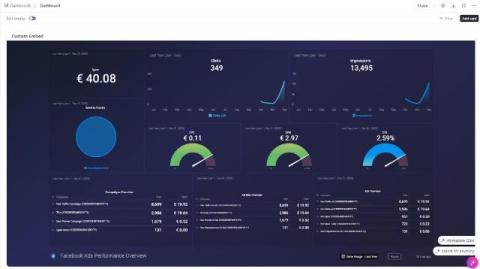
Enjoy reading this blog post written by our experts or partners. If you want to see what Databox can do for you, click here. Google “landing page statistics” and you’ll find plenty of statistics for landing page performance in all businesses, but not so much for specific niches. If you work in B2B SaaS or tech, you know that your audience has specific needs that a one-size-fits-all approach can’t meet.

What is a database?

A database is a storage system that stores data in an organized manner for easy access and management. In just the last two years, 90% of the world’s data has been created, and the volume of global data doubles every two years. All this data is stored in databases. So, whether you’re checking the weather on your phone, making an online purchase, or even reading this blog, you’re accessing data stored in a database, highlighting their importance in modern data management.

Introducing Multiple Snowflake Configurations per ThoughtSpot Connection

Organizations leveraging cloud data warehouses like Snowflake require the ability to efficiently manage and optimize their data connections. Without this, data teams will face challenges with various use cases, such as workload distribution and environment testing. Recognizing the need for greater flexibility and control over data connections, ThoughtSpot developed a powerful new feature: Multiple Configurations per Connection.

Introducing Polaris Catalog: An Open Source Catalog for Apache Iceberg

Open source file and table formats have garnered much interest in the data industry because of their potential for interoperability — unlocking the ability for many technologies to safely operate over a single copy of data. Greater interoperability not only reduces the complexity and costs associated with using many tools and processing engines in parallel, but it would also reduce potential risks associated with vendor lock-in.

5 Reasons You Need to Add Atlas to Microsoft Dynamics

Originally created in the 1890s, the Swiss army knife was a logical solution to officers’ need to be able to repair their weapons, open their canned food, and cut things as needed. Since then, simple items that offer multiple solutions to achieve a goal are often referred to as being the Swiss army knife of their kind.

Acquisition of Verta's Operational AI Platform Will Transform Cloudera's AI Vision to Reality

In an era where artificial intelligence (AI) is reshaping enterprises across the globe—be it in healthcare, finance, or manufacturing—it’s hard to overstate the transformation that AI has had on businesses, regardless of industry or size. At Cloudera, we recognize the urgent need for bold steps to harness this potential and dramatically accelerate the time to value for AI applications.

Cloudera Introduces AI Inference Service With NVIDIA NIM

We are excited to announce a tech preview of Cloudera AI Inference service powered by the full-stack NVIDIA accelerated computing platform, which includes NVIDIA NIM inference microservices, part of the NVIDIA AI Enterprise software platform for generative AI. Cloudera’s AI Inference service uniquely streamlines the deployment and management of large-scale AI models, delivering high performance and efficiency while maintaining strict privacy and security standards.