

Systems | Development | Analytics | API | Testing

Developing More Accurate and Complex Machine-Learning Models with Snowpark for Python

Sophos protects people online with a suite of cybersecurity products. Hear Konstantin Berlin, Head of Artificial Intelligence at Sophos, explain how the Snowflake Data Cloud helps Sophos increase the accuracy of their machine-learning models by allowing data scientists to process large and complex data sets independent of data engineers. Through Snowpark, data scientists can run Python scripts along with SQL without having to move data across environments, significantly increasing the pace of innovation.

How ThoughtSpot Uses ThoughtSpot for Field Marketing

As ThoughtSpot’s SVP of Corporate Marketing I oversee a field marketing team that acts as the glue between our Marketing and Field Sales teams. When people talk about field marketing, they’re often just thinking of events — but we have a far broader remit than that. Each member of the Field Marketing team sits within a specific sales region, acting as a kind of regional CMO.

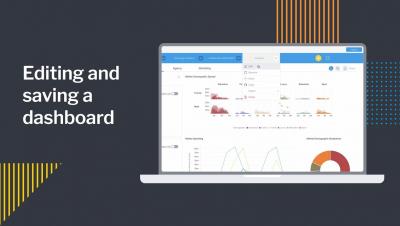
Editing and saving a dashboard

In this video you will learn how to edit one of your existing Yellowfin dashboards — such as adding a new report to a dashboard and then save those edits by publishing the dashboard. You will also learn how to edit/change the title of the dashboard, select/change the folders where the dashboard will be saved, and how to add tags to your dashboard. You will also learn how to edit/change the Dashboard Access to either Public or Private.

Scaling Kafka Brokers in Cloudera Data Hub

This blog post will provide guidance to administrators currently using or interested in using Kafka nodes to maintain cluster changes as they scale up or down to balance performance and cloud costs in production deployments. Kafka brokers contained within host groups enable the administrators to more easily add and remove nodes. This creates flexibility to handle real-time data feed volumes as they fluctuate.

How to simplify and fast-track your data warehouse migrations using BigQuery Migration Service

Migrating data to the cloud can be a daunting task. Especially moving data from warehouses and legacy environments requires a systematic approach. These migrations usually need manual effort and can be error-prone. They are complex and involve several steps such as planning, system setup, query translation, schema analysis, data movement, validation, and performance optimization.

Analyzing satellite images in Google Earth Engine with BigQuery SQL

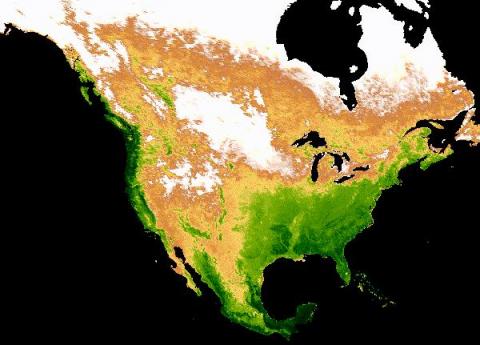
Google Earth Engine (GEE) is a groundbreaking product that has been available for research and government use for more than a decade. Google Cloud recently launched GEE to General Availability for commercial use. This blog post describes a method to utilize GEE from within BigQuery’s SQL allowing SQL speakers to get access to and value from the vast troves of data available within Earth Engine.

Building an automated data pipeline from BigQuery to Earth Engine with Cloud Functions

Over the years, vast amounts of satellite data have been collected and ever more granular data are being collected everyday. Until recently, those data have been an untapped asset in the commercial space. This is largely because the tools required for large scale analysis of this type of data were not readily available and neither was the satellite imagery itself. Thanks to Earth Engine, a planetary-scale platform for Earth science data & analysis, that is no longer the case.