Systems | Development | Analytics | API | Testing

How to Drill Through in Yellowfin Dashboards

Welcome to the latest entry in Yellowfin Japan’s ‘How to?’ blog series! This series of blogs aims to provide your team with another hands-on example of adding data visualization to your Yellowfin dashboards, using our array of chart and graph types. In the previous blog, we created a Combination Chart by aggregating on the basis of Year and Month.

Navigating the European Accessibility Act and Compliance with Linux Foundation's AmyJune Hineline

What does accessibility mean for your business, and how can you prepare for the upcoming changes? In this episode, Jason Baum and Marcus Merrell are joined by AmyJune Hineline from the Linux Foundation to discuss the upcoming European Accessibility Act and how it will shape the future of digital products. With the deadline approaching in 2025, they cover what steps companies should take to ensure their platforms are accessible to everyone.

Service virtualization 2.0 with Tricentis API Simulation

Service virtualization, which gained prominence in 2012, has significantly transformed the way software testing and development are approached. Originally designed to address limited access to dependent systems during development, service virtualization has evolved into a critical technology for enabling efficient and continuous testing. This blog explores its origins, key advancements over the past decade, ongoing challenges, and how API simulation is shaping the future of testing.

Driving Innovation and Efficiency with Gen AI in Life Sciences

AI has profoundly impacted the life sciences industry for the past couple of decades. In the 2000s, researchers were able to use AI to analyze the human genome, identifying genetic markers and variations that could predict an individual’s susceptibility to certain diseases. This opened the door to personalized medicine and more effective therapies for genetic disorders.

Golang Wrapper: Dependency Wrapping, in Go

All but the simplest applications borrow code. You could write everything yourself from just core language features but who has time for that? Instead you take on dependencies, pieces of code written by others that usually give us 80% or more of what we need with 20% of the effort. Sometimes these dependencies are made to interact with a specific technology like a database, or perhaps it’s just a library providing some feature that would be onerous to write yourself.

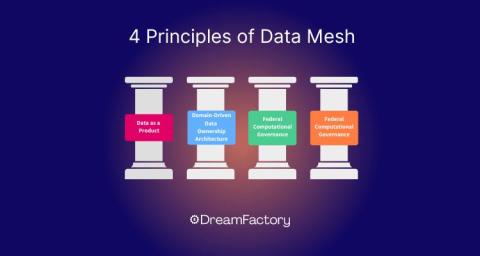
Data Management and the Four Principles of Data Mesh

A relatively new term in the world of data management, data mesh refers to the process of creating a single, unified view of all enterprise data. This process can happen in several ways, giving business users easy access to the data they require for decision-making. Several principles guide data mesh design and implementation. This article will discuss the principles of data mesh and how they can help your business get the most out of its data.

REST vs. GraphQL: Which API Design Style Is Right for Your Organization?

The evolution of APIs (application programming interfaces) has been all the hype in recent years. In many ways, they're powering the modern internet as they open doors to organizations and developers around the globe. Data shows that 98% of enterprise leaders believe APIs are essential for survival concerning digital transformation, yet most struggle to develop a comprehensive rollout strategy.

Tideways joins the Open Source Pledge

Tideways is joining the Open Source Pledge because we want to make a public commitment on our various open source contributions. Not only do we rely on open source software in our product Tideways, we are also building our business on top of the open source language PHP and its continued success. The mission of the recently started Open Source Pledge initiative is to establish a new social norm in the tech industry of companies paying Open Source maintainers.

How Booking.com Used Data Streaming to Put Travel Decisions into Customer's Hands

Booking.com wanted to give people a “connected trip” experience, allowing customers to seamlessly book flights, accommodations, car rentals, and excursions in one visit. The company realized the value of data streaming early on in reaching this goal, but the operational effort had become overwhelming. Learn how Booking.com found the answer in Confluent’s data streaming platform. With its automated configuration that required no ongoing maintenance, the team was able to prioritize innovation with data and provide the comprehensive booking experience they had been searching for.