Systems | Development | Analytics | API | Testing

What's New In Loadero (November 2020)

November was a big month for Loadero in terms of updates. We were working on the compute units feature for a long time and are very happy that now we provide our customers even more control over configuring test participants. We improved our test runner stability and made some important fixes. We are proud to share what has been updated and are sure that this will help you to run even better tests with us.

A Universal Approach for Building a Successful Automation Testing Framework

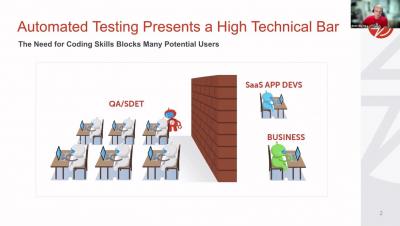
In the past 20 years, open-source was speeding up software development. As the Agile world requires teams to release fast and often, it’s time for open-source play its role in ensuring software quality. Join Katalon VP of Product as he uncovers the approach to developing your automation testing tool from open-sources, and the 5-year lessons his team learned from building Katalon Studio - a free, inclusive automation testing tool based on Selenium.

Learnings from CNCF's Envoy and OPA Creators Matt Klein and Tim Hinrichs

Applications architected as microservices are becoming more prevalent every day, but just like their monolithic ancestors, microservice applications must adhere to organization-wide constraints around compliance, security, performance, etc. Authorization — controlling which people and machines can perform which actions — is a foundational security problem that requires new solutions in a microservice world because of changes in requirements around performance, availability and even where authorization gets enforced architecturally.

Fast & Curious: Find and Fix Slow Queries & API Requests

AppSignal was built because we were tired of slow and clumsy monitoring setups. Instead, we built monitoring that’s easy yet powerful - an intuitive interface enables you to figure out what’s happening in no time. Today, our team made finding slow events effortless. We’ve fully overhauled our slow events feature, helping developers to quickly find and fix slow queries and API requests.

Rest vs SOAP: The Key Differences You Need To Know

When choosing between these two popular web API (application programming interface) formats it can be surprisingly difficult to know which one you should select for your infrastructure. Although both Rest (Representational State Transfer) and SOAP(Simple Object Access Protocol) share attributes in common with how they handle HTTP protocols, there are a number of key differences as discussed in this article.

Solution Architect: Become the Ultimate Problem Solver

There's an old XKCD cartoon that describes a conversation between a manager and a software developer. This kind of conversation happens all the time. Business leaders know their strategic goals. IT people know what the tech can do. But aligning goals with technology is an ongoing challenge.This is where solution architects come in. They act as a bridge between the business and technical side, and they figure out how to get things done.

Cloudera Operational Database Infrastructure Planning Considerations

In this blog post, let us take a look at how you can plan your infrastructure planning that you may have to do when deploying an operational database cluster on a CDP Private Cloud Base deployment. Note that you may have to do some planning assumptions when designing your initial infrastructure, and it must be flexible enough to scale up or down based on your future needs.

Leveraging Docker Containers to Manage Sauce Connect Tunnels

Sauce Connect Proxy™ is a built-in HTTP proxy server that opens a secure "tunnel" connection for testing between a Sauce Labs virtual machine or real device and a website or mobile app hosted on your local computer ("localhost") or behind a corporate firewall. It provides a means for Sauce Labs to access your application or website.

Beware of Creating a New Legacy of Artificial Intelligence Silos

Although the issue of silos in IT and data management are well known, companies appear to be falling back into this trap by not distributing their artificial intelligence (AI) and machine learning (ML) capabilities across their business. New research from Qlik and IDC revealed that just 20 percent of businesses widely distribute these capabilities across the organization.