Systems | Development | Analytics | API | Testing




Why Should You Use PHP Frameworks for Web Development?
PHP is a powerful, server-side programming language with numerous benefits and features. The language is extensively utilized to create various web development solutions. However, core PHP may not be suitable to work on complex business requirements, as PHP code may get intricate. Also, efficiently maintaining complex applications built on PHP normally requires those who worked on the original project.
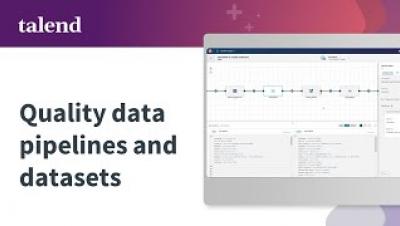
Collaborate, build, and share quality pipelines and datasets

Everything you Need to Know About WSO2 API Controller 4.1.0
WSO2 API Controller 4.1.0 was released with WSO2 API Manager 4.1, which supports performing CI/CD tasks for APIs/API Products and Applications alongside WSO2 API Manager.
Powering The Sales Organization with Actionable Insights - Part II
As virtual selling and digital buying continues to grow, data, insights and timely action are becoming more valuable than ever.

JavaScript RangeError: Maximum Call Stack Size Exceeded
The JavaScript RangeError: Maximum call stack size exceeded is an error that occurs when there are too many function calls, or if a function is missing a base case.

A Deep Dive Into Laravel Queues
Sometimes you have a task that is too slow for a typical web request, such as sending an email or parsing a CSV file. Laravel Queues are a great fit for that type of work. In this article, Farhan dives deep into the Laravel docs to help us understand all of the various options.

How to automate delivering Unity apps to testers with CI/CD
TL;DR: It’s critical to deliver the latest builds of your Unity game to testers and stakeholders. You can automate this process by setting up a Codemagic CI/CD pipeline and either using public Codemagic dashboards to access build artifacts or setting up notifications in Discord with links to builds and release notes. Let’s see how we can use automation tools to share our game builds with QA testers and stakeholders!
Best Dashboard Visualization Tools According to 30 Experts

3 Ways to Accelerate Claims and Improve the Customer Experience
When it comes to the claims process, speed is of the utmost importance. However, too often, manual inefficient processes slow insurers down, resulting in settlement delays, a poor customer experience, and higher costs. And today’s economic climate only exacerbates claims leaders' challenges.