Systems | Development | Analytics | API | Testing

Why Databox MCP Wins for AI Analytics Over Individual Connector MCPs

The Model Context Protocol (MCP) has given AI assistants something they’ve never had before: a standardized way to pull live data from external systems. Instead of just generating text, an AI agent can now query your CRM, check ad performance, or pull revenue numbers in real time. The industry’s response has been predictable. Every major platform is racing to build their own MCP server.

Analytics Beyond Reporting: How Embedded BI Drives Executive Action

Most executives are drowning in dashboards but starving for insights. We’ve been conditioned to view “analytics” as a rear-view mirror, a report on what happened, rather than a steering wheel for what should happen next. Traditional BI creates a “reporting tax,” where scaling insights requires a proportional increase in data analyst headcount to interpret the noise.

Enterprise AI Infrastructure Security Series - 3) Configuration Governance with Administrator Vaults

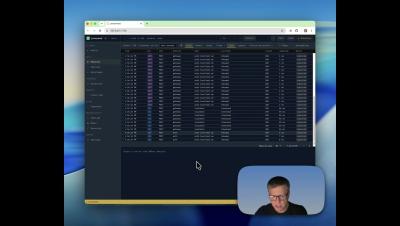
Securing ClearML for the Enterprise — Part 3: Configuration Governance with Administrator Vaults In this video we walk through ClearML's vault system — how personal vaults and administrator vaults work, and how administrator vaults let you enforce platform-level policies on storage locations, container images, and credentials across your teams and service accounts. What we cover.

Leveraging the MCP Registry in Kong Konnect for Dynamic Tool Discovery

As enterprises start deploying AI agents into real systems, a new architectural challenge is emerging. Agents need a reliable way to discover tools, services, and capabilities dynamically, instead of relying on hardcoded integrations. This is where the Model Context Protocol (MCP) ecosystem is rapidly evolving. MCP servers expose tools and capabilities that AI agents can use. However, once organizations begin deploying multiple MCP servers across environments, the question becomes clear.

Configuring Kong Dedicated Cloud Gateways with Managed Redis in a Multi-Cloud Environment

A persistent challenge arises as businesses adopt multicloud architectures and agentic AI: the need for state synchronization. API and AI gateways require a robust persistence layer to synchronize data, whether it's for governing AI token usage, facilitating agent-to-agent communication, or boosting performance through caching.

Kong Simplifies Multicloud Cloud Gateways with Managed Redis Cache

As enterprises race to deploy multicloud architectures and Agentic AI, they face a common bottleneck: "state." To govern AI token usage, manage agent-to-agent communication, or optimize performance via caching, API and AI gateways require a persistence layer to synchronize data. We’re excited to share the GA of Managed Redis cache for Kong Dedicated Cloud Gateways (DCGW).

Best AI test automation tools for fast, high-quality releases

The promise of test automation was simple: automate repetitive testing tasks, catch bugs faster, and ship quality software at scale. Yet for most development teams, that promise remains unfulfilled. Traditional test automation frameworks demand specialized coding skills, require constant maintenance when applications change, and create bottlenecks that slow down release cycles rather than accelerate them.

What Is an Agentic Semantic Layer, and Why Does It Matter?

AI can now generate SQL, build dashboards, and answer questions in plain language. But generating queries isn’t the same as understanding a business. The model might not know which revenue definition finance approves, how your fiscal calendar works, or which fields require restricted access. As AI agents become the front door to analytics, the real challenge isn’t query generation; it’s semantic grounding. That’s where the Agentic Semantic Layer becomes essential.

The European Health Data Space (EHDS): From Regulation to Reality

The European healthcare landscape is undergoing its most significant digital transformation in decades. We are moving away from a fragmented era where health data was locked within the walls of individual hospitals and national borders. In its place, the European Health Data Space (EHDS) is emerging, a unified digital ecosystem designed to give patients control over their data and unleash its potential for research and innovation.