Systems | Development | Analytics | API | Testing

The latest News and Information on Software Testing and related technologies.

Stop Chasing Ghosts, Use Observability to Find Real Performance Gremlins

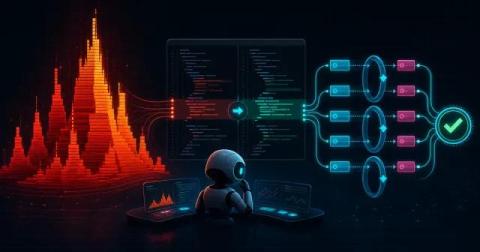
Performance testing without observability is like diagnosing a sick patient using only a thermometer. You get one number. You miss everything that matters. Observability-driven performance testing combines load testing with metrics, logs and distributed tracing to identify not just when performance degrades, but exactly why.

SAP testing is broken. Agentic AI is how we fix it.

Software testing has a bad rap for bottlenecks — and nowhere is that truer than in the SAP world. An overwhelming majority of SAP orgs continue to rely on manual testing practices that can consume up to 30% of implementation budgets, making QA out to be a persistent roadblock to transformation. To be fair to SAP QA teams, the issue is not as much about inefficiency as complexity.

Everything we announced at our Agentic Quality Engineering Platform launch

Over 1,000 people around the world tuned in as Tricentis CEO Kevin Thompson and VP of AI David Colwell unveiled our new integrated platform, followed by a live demo from Enterprise Solution Architect Matt Serpone. From our headquarters in Austin, Texas, we unveiled a unified solution designed to help enterprises treat quality as a coordinated system rather than a collection of disconnected tools.

What Breaking AI Applications Taught Us About Building Reliable Ones

The global industry is currently in a feverish rush to "AI-enhance" every facet of the digital landscape. However, a critical distinction has emerged: while building an AI-integrated application is relatively simple, engineering one that maintains operational integrity in a production environment represents a watershed moment for modern engineering teams. BugRaptors spent the last year inside the intricate internal logic and non-deterministic layers of AI application testin g.

Is OpenTelemetry overkill? There's a lazier (and better) way. #speedscale #sre #ebpf #kubernetes

If you "aspire to be lazy" like we do, you know that building staging environments and mocking complex back-ends (like MySQL, AI models, and 3rd party APIs) is a massive time sink. In this demo, we show you how to use Internet Magic (aka eBPF) to: Stay tuned for Part 2, where we take these recordings and spin up a staging environment automatically.

AI Coding Agents Break What Works

Your AI coding agent just made every test pass. Ship it, right? Not so fast. A growing class of AI-generated bugs doesn’t come from writing bad code. It comes from the AI changing working code to accommodate its own mistakes. This isn’t a theoretical risk. It’s happening now, in production codebases, and it’s harder to catch than any bug the AI might introduce from scratch.

Create tests in Reflect directly from your coding agent!

If you’ve used Claude Code, GitHub Copilot, Cursor, or any coding agent, you already know the feeling. You describe what you want in plain language, the agent figures out the steps, and you watch it work. When something goes wrong, it backs up and tries a different approach. Reflect now brings that same agentic workflow to test automation. Through the SmartBear MCP server, any coding agent that supports MCP can connect to Reflect and build tests from high-level objectives.

Beyond the Dashboard: Using Telemetry to Solve the Unknown Unknowns of Performance

Your dashboards are lying to you, not through bad data, but through incomplete data. They show you what you told them to watch. They cannot show you what you did not know to ask. Telemetry-driven performance engineering uses metrics, logs, traces and profiling to detect and diagnose issues that traditional dashboards cannot capture. The failures that hurt most are not the ones you predicted; they are the ones your monitoring was never designed to catch.

Real Device Access API - Product Demo

Building Internal Developer Tools with a Device Lab API: Sessions, Streaming, Logs, and Automation For years, platform teams have had to choose between costly internal device labs for control or public clouds with limited access. That tradeoff ends with the Real Device Access API, the first solution to treat mobile devices as Infrastructure-as-Code—delivering direct, low-latency access to real devices without framework constraints. See how teams can retire internal racks while running any workflow on fully managed infrastructure they control programmatically.