Mailchimp
Not subscribed to OpsMatters Newsletter


Whether you're familiar with job schedulers or new to the concept, two popular libraries in the Node.js ecosystem stand out: Bull and Agenda. These libraries provide unique features and advantages when it comes to efficient job scheduling. Let's explore the ins and outs of Bull and Agenda! 🚀
Good code has a lot to do with how readable it is. As developers, we more often read code than write it. As my Perl teacher told us many times: the flexibility of Perl's syntax was its best and worst trait at the same time. Ruby's syntax was influenced partly by Perl and is also quite flexible. Whatever language you pick, set some guidelines to avoid overusing a language's flexibility. Style guides for Ruby abound on the web, and it's not difficult to pick a style nowadays.
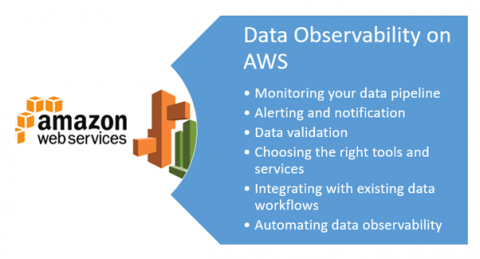
In a survey by the Harvard Business Review, 87% of respondents stated their organizations would be more successful if frontline workers were empowered to make important decisions in the moment. And 86% of respondents stated that they needed better technology to enable those in-the-moment decisions. Those coveted insights live at the end of a process lovingly known as the data pipeline.
Today, we are pleased to announce the availability of Tricentis Test Automation (TTA) for SAP integrated with SAP Cloud ALM. This release is the result of three years of close collaboration between Tricentis and SAP, and the result brings the best of application lifecycle management and test automation to SAP customers.
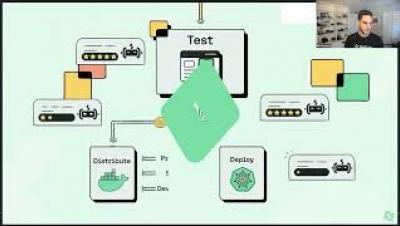
As we continuously improve Choreo's capabilities, we're excited to introduce a significant new addition: Deployment Tracks. This empowers users to achieve backward-compatible API releases, ensuring a smoother experience for API publishers and API consumers alike. This transition will entail minor user interface (UI) changes in the Choreo console for your existing components.
Various factors can impede an organization's ability to leverage Confluent Cloud, ranging from data locality considerations to stringent internal prerequisites. For instance, specific mandates might dictate that data be confined within a customer's Virtual Private Cloud (VPC), or necessitate operation within an air-gapped VPC. However, a silver lining exists even in such circumstances, as viable alternatives remain available to address these specific scenarios.
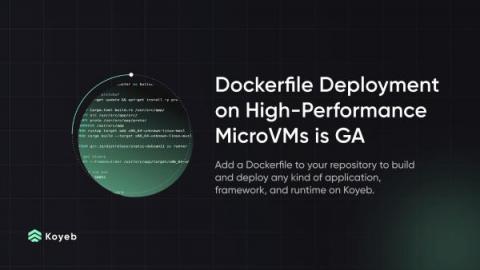
Today, we are excited to announce the support of Dockerfile based deployments in general availability. You can now deploy any GitHub repository that contains a Dockerfile across all our locations worldwide. It can be used to deploy APIs, full-stack applications as well as workers with no extra cost. Building and deploying using Dockerfiles offers more flexibility: you can deploy any kind of application, framework, and runtime, including with custom system dependencies.