Mailchimp
Not subscribed to OpsMatters Newsletter


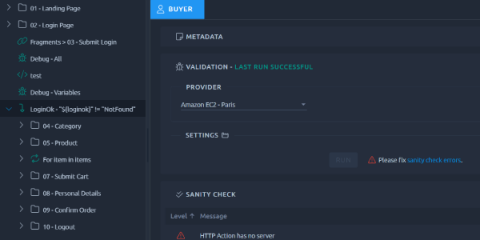
This article is the second in a series of overviews of our new UI. You can find the first one here. This time we will dive into the changes we’ve made in the design phase. We’ve addressed many pain points from the old UI that we want to detail here: This will make the design in OctoPerf even faster, so that you can focus more time on your tests and analyzing them.
We are going to look at how to test SOAP Services using JMeter and some of the issues that you can face when testing these services. We are going to provide some basic principles of SOAP in this post and while some requests can be complex in their definition and structure testing them is relatively straightforward.
There are many articles on the huge benefits of performance testing integrated into the development process and the concept of shift-left performance testing. We have also discussed the concepts of Load Test Driven Development which involves the creation of performance testing in parallel with the code development and sits alongside Test Driven Development. We are going to consider in this post how involving performance testing resources in the application design process can be a benefit.
Financial services organizations, like those across many other industries, struggle with systemic issues brought on by disjointed, outdated core technologies. That’s why Appian serves the financial services industry—to deliver solutions that minimize the strain those issues cause. To best serve industries’ unique needs, Appian invests in experts with years of first-hand experience.
The majority of React applications incorporate some form of data visualization. This is true for all languages, not only React. Some of the most frequent components of mobile and web applications today are charts, graphs, and other sorts of visual representations of data. JavaScript frameworks like React offer scalability and adaptability, to name a few advantages. With several libraries and components to supplement the built-in functionality?
CMA CGM is a global player in sea, land, air, and logistics solutions, serving 420 of the world’s commercial ports and operating 285 shipping lines with 580 vessels. Supporting such complex international logistics requires a sophisticated and reliable IT infrastructure, underpinned by APIs that unlock the data needed to flow across the ecosystem of internal IT, partners, and customers.
Learn key considerations in establishing data residency requirements.