Mailchimp
Not subscribed to OpsMatters Newsletter


The component previewer is a feature that allows you to preview your data at each component step without having to validate packages and run full-scale production jobs. It gives you the ability to extract, transform and preview your data on any transformation component, allowing you to debug your pipeline and/or to confirm and validate your data flow logic. Component previews are similar to the data previews available on source components, which you might already be familiar with.
With a new year ahead, it’s time for financial services to pause, take stock of the “new normal,” and plan a path forward. COVID-19 forced nearly every industry to adapt to a new reality, and the financial services industry was no exception. Consumer habits shifted drastically. Suddenly, many people started working from home. Employee and customer needs changed. Adaptability was a necessity.
I’ve been a Business Intelligence (BI) analyst and evangelist for over two decades now. As you can imagine I’ve worked with many different BI platforms throughout my career, especially during my time as a BI Consultant. In this role, I was product agnostic, so from Power BI to Tableau, you name it, I used it! However, Qlik Sense quickly stood out to me as the most powerful and intuitive platform on the market.
I’ve met with lots of customers and prospects throughout my career. And, I’ve noticed that, when I’ve asked them to describe their current software situation, many would say the same things. “We should have updated this a long time ago.” “It’s embarrassing how long it takes to do a simple task.” “I bet other companies stopped doing things like this years ago.”
Adopting a cloud-based data warehouse is your shortcut to superior marketing analytics and a 360-degree view of your customers.
In this first section, I’ll provide a quick overview of the business case and the tools you can use to create a Kubernetes ingress API gateway. If you’re already familiar, you could skip ahead to the tutorial section. Digital transformation has led to a high velocity of data moving through APIs to applications and devices. Companies with legacy infrastructures are experiencing inconsistencies, failures and increased costs. And most importantly, dissatisfied customers.
Joining us is Claire Barrett, Director at APIsFirst and a seasoned consultant in strategy and technology change. In our podcast she identifies the key issues to ensure digital transformation success in larger, more mature organizations, and examines why digital savviness is key, how you should always aim for shared business goals, and why balanced teams are preferable. Larry Ebringer, Moesif’s CMO, is your host today.
As we discussed in Firecracker MicroVMs: Lightweight Virtualization for Containers and Serverless Workloads, Firecracker is a lightweight virtual machine monitor (VMM) that uses Linux kernel-based virtual machines (KVM) to provision and manage lightweight virtual machines (VMs), also known as microVMs. Without further ado, here is a list of the top ten reasons why we love Firecracker.
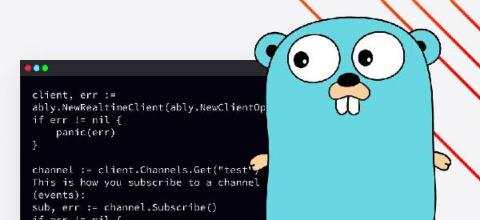
If you’ve ever used Go before, the concepts of Publish/Subscribe should be fairly familiar to you. It is much like how goroutines communicate over channels between each other, the idea boils down to allowing for such a channel to have multiple ‘subscribers’ receive messages sent on the channel. This paradigm can be powerful when used right, allowing for a cut down of complexity from both the publisher and subscriber side, as well as fast asynchronous communication.