Mailchimp
Not subscribed to OpsMatters Newsletter


If you are familiar with Bitrise you probably already used the Script Step to do something in your CI workflow. There are multiple options for the language of your script, by default it is a bash script, but the description of the step also mentions Go, Ruby or Python. Although it does not mention Java or Kotlin, I will show you in the next few minutes how to do it!
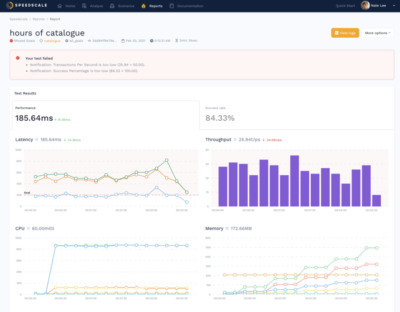
As a team we have spent many years troubleshooting performance problems in production systems. Applications have gotten so complex you need a standard methodology to understand performance. Fortunately right now there are a couple of common frameworks we can borrow from: Despite using different acronyms and terms, they fortunately are all different ways of describing the same thing.
The amount of big data generated around the world by the time you finish this page is limitless. Think about it for a second. Companies everywhere will create an innumerable amount of data right now — customer records, sales orders, chain reports, emails, you name it. Companies need all this data for data analytics — the science of modeling raw data to uncover precious real-time insights about their business. It's like opening a treasure trove.
In 1969, my aunt graduated from university and joined IBM, the dominant player in the nascent tech industry at the time. She remained at “Big Blue” where she met and married my uncle, and rose up through the management ranks, until their joint semi-retirement exactly 30 years later. She recently told me, “the only way you could get fired in those days was to murder someone, embezzle or steal”.
The Cloudera Data Platform (CDP) represents a paradigm shift in modern data architecture by addressing all existing and future analytical needs. It builds on a foundation of technologies from CDH (Cloudera Data Hub) and HDP (Hortonworks Data Platform) technologies and delivers a holistic, integrated data platform from Edge to AI helping clients to accelerate complex data pipelines and democratize data assets.
Once again, Yellowfin has been recognized in the Gartner Magic Quadrant. This is the eighth time we have been recognized and the second year we are in the Visionary Quadrant. As per our knowledge, Yellowfin is also the only Australian vendor to be included.
In a 2020 study performed by Nature Research, 70 different teams of neuroimaging experts were asked to test nine hypotheses by looking at the same MRI data set. You may not be surprised to learn that these teams reached a wide range of different conclusions, in part because no two teams chose identical workflows to analyze the data. With seventy teams, there were 70 different workflows.
Part of being a data professional is pretty simple... you notice when things don't add up. In my case, my Apple Watch and my Peloton aren't on the same data page when it comes to calorie tracking. In this blog, I'm going to deduce why I think it's happening and use Qlik and the Peloton/Apple metrics as the data to support my conclusions.