We collect the latest Development, Anaytics, API & Testing news from around the globe and deliver it direct to your inbox. One email per week, no spam.
You stare at last quarter’s sales data in your spreadsheets, but when your CEO asks “What should we do differently next month?” you freeze. The numbers are there, but they don’t tell a story. They don’t point to clear actions. Despite all the data you collect, you still make the most important decisions based on gut feeling. Sounds familiar? You’re not alone.
Before we delve into agentic RAG and AI agents, let’s take a moment to acknowledge that the world of artificial intelligence is evolving at a tremendous pace. From the initial excitement surrounding large language models (LLMs) to the practical application of generative AI (Gen AI), businesses are constantly finding new ways to automate tasks and innovate faster.
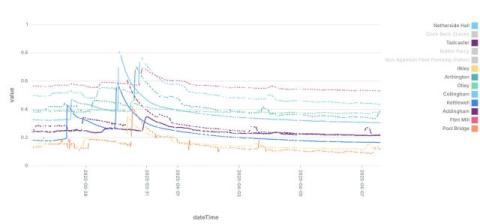
Whether we like it or not, when it comes to building data pipelines, the ETL (or ELT; choose your poison) process is never as simple as we hoped. Unlike the beautifully simple worlds of AdventureWorks, Pagila, Sakila, and others, real-world data is never quite what it claims to be. In the best-case scenario, we end up with the odd NULL where it shouldn’t be or a dodgy reading from a sensor that screws up the axes on a chart.
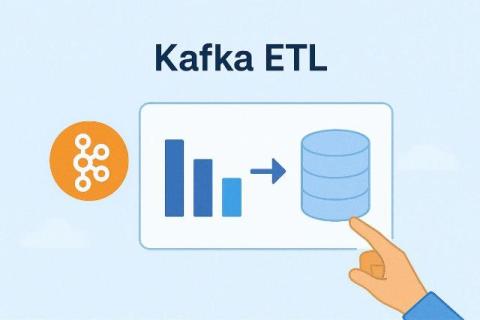
In the era of real-time analytics, traditional batch ETL processes often fall short of delivering timely insights. Apache Kafka has emerged as a game-changer, enabling organizations to build robust, scalable, and real-time ETL pipelines. This article delves into how Kafka for ETL facilitates modern integration processes, its core components, best practices, and real-world applications.
In the fast-paced world of digital marketing, having the right tools to track and analyze data can make the difference between a successful campaign and one that falls flat. With an increasing number of touchpoints and channels, marketers are under constant pressure to collect meaningful insights that drive decision-making.
In the realm of cloud data warehousing, Snowflake stands out for its scalability and performance. A pivotal feature contributing to its efficiency is data clustering. This guide delves into the intricacies of Snowflake's data clustering, offering insights and best practices for clustered tables to harness its full potential.
Watch a quick demo of the Fivetran Connector SDK to better understand how to build and deploy custom data pipelines within the Fivetran platform using Python. Easily replicate from niche sources, internal APIs, and custom filtering logic into your destination of choice with the Fivetran Connector SDK.
Yellowfin 9.15 is a significant version release that introduces a major update to our Yellowfin Guided NLQ feature in the form of AI-enabled Natural Language Query (AI NLQ), as well as a host of general product enhancements, fixes and security updates. In this blog, we will cover what AI NLQ brings to your embedded analytics deployment, as well some of the other highlights arriving in the Yellowfin 9.15 version release. For the full technical list of updates, please visit our release notes page.