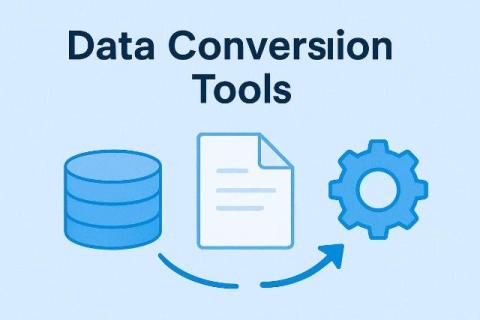
The Ultimate Guide to Data Conversion Tools in 2025

In today's data-driven landscape, organizations are inundated with vast amounts of information from diverse sources. To harness the full potential of this data, it's imperative to convert it into a consistent, usable format—a process facilitated by data conversion tools. These tools are integral to modern Extract, Transform, Load (ETL) workflows, enabling seamless data integration, transformation, and loading across various platforms.

What is natural language query (NLQ)?

Providing your analytics users the ability to get answers from their data is useful, but only if the solution can guide them to ask the right questions. The rising integration of artificial intelligence (AI) and machine learning (ML) in many business intelligence (BI) solutions has enabled new innovative approaches in combining natural language techniques with self-service analytics, resulting in helpful NLQ tools.

Best 10 Free Datasets for Manufacturing [UPDATED]

The manufacturing industry can benefit from AI, data and machine learning to advance manufacturing quality and productivity, minimize waste and reduce costs. With ML, manufacturers can modernize their businesses through use cases like forecasting demand, optimizing scheduling, preventing malfunctioning and managing quality. These all significantly contribute to bottom line improvement.

Supercharge Reporting in Tableau & Power BI: Overcoming REST API Roadblocks with Simba Drivers

Modern reporting tools like Tableau and Power BI have transformed how end users visualize and analyze data. But for developers and analysts relying on REST APIs to connect these platforms to their data sources, frustrations often mount. From inconsistent data formats to performance bottlenecks, REST APIs—while powerful—weren’t built to handle the complex, high-volume demands of modern BI environments.

Maximizing the Power of AI for ISVs: From Dashboards to Predictive Intelligence

Artificial Intelligence (AI) is no longer a futuristic ambition — it’s the strategic reality of today’s most competitive Independent Software Vendors (ISVs). In our recent Seamless Intelligence: Real-World AI Success Stories from Innovative ISVs webinar, I broke down how AI is transforming the ISV landscape, offering a blueprint for how organizations can move beyond dashboards, and into the age of predictive and generative intelligence.

How to Build a Multi-Agent Orchestrator Using Apache Flink and Apache Kafka

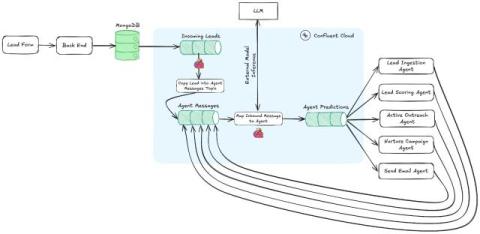
Just as some problems are too big for one person to solve, some tasks are too complex for a single artificial intelligence (AI) agent to handle. Instead, the best approach is to decompose problems into smaller, specialized units so that multiple agents can work together as a team. This is the foundation of a multi-agent system—networks of agents, each with a specific role, collaborating to solve larger problems. When building a multi-agent system, you need a way to coordinate how agents interact.