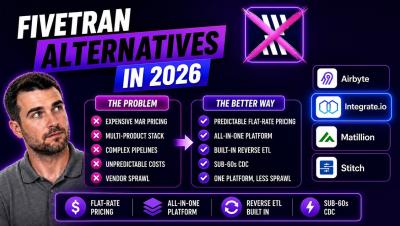

How to Replace Custom Python or PowerShell Scripts for Client Data Ingestion

The fastest way to replace custom Python or PowerShell scripts for client data ingestion is to move each script's logic into a reusable, config-driven pipeline that stores connection details, field mappings, and schedules as metadata instead of code. This guide is for data integration managers and engineers who currently maintain a script per client or per source system. After following it, you'll have a repeatable pattern for onboarding new clients without writing a new script for each one.
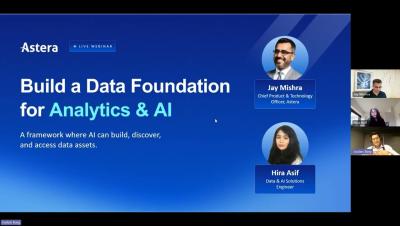
Why It Matters: Data and AI Literacy Is Now a Business-Critical Skill

One thing has become increasingly clear to me: the businesses that thrive in the AI era won't be the ones with the most data, they'll be the ones where every employee knows how to use it. The World Economic Forum's 2025 Future of Jobs Report names analytical thinking as the top core skill companies need today, and a 2024 Gartner survey found poor data literacy to be one of the top five obstacles to analytics success.

Cloudera Agent Studio & Iceberg MCP to Monitor Table Health

In this video, Cloudera’s Dipankar demonstrates how to build an AI agent in Cloudera Agent Studio powered by an open-source Apache Iceberg MCP Server. As a real-world use case, the agent monitors Apache Iceberg table health by analyzing metadata for issues such as small files, partition skew, snapshot history, and other operational signals. Subscribe to stay ahead of the curve with the latest in data strategy, open architectures, and enterprise AI innovations.

Why Salesforce ETL Tools Keep Breaking (And What Actually Fixes It)

Salesforce integration always starts simple. You pull a few objects, set up incremental syncs, push the data into your warehouse. Then Salesforce changes. Objects shift, fields get added, data types evolve, APIs update, and rate limits get hit and your simple connector turns into a full-time maintenance job.