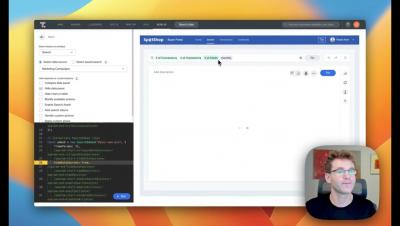
Retail companies can easily visualize and analyze their geospatial data in BigQuery using the CARTO platform.
Today, data is the lifeblood of every organization. Without it, you’re left without key insights into business processes, consumers, employees, and the overall health of your entire organization. And here’s the scariest part: most organizations are on life support due to their inability to properly manage their data and turn it into actionable insights. Data fabric technology can help in a significant way, which is why it’s been getting so much buzz recently.
Unify data from diverse sources and formats using Aiven Kafka's open source streaming. Analyze with BigQuery for swift, accurate insights.
Elements of the Google Data Cloud including BigQuery, DataFlow, and Vertex AI are behind Glean’s personalized enterprise search platform.
Data fabrics are getting a lot of attention lately, and for good reason. But, for any topic with a lot of hype, there also tends to be a lot of confusion. If you are still trying to fully grasp where the concept of a data fabric architecture fits amongst all of the warehouses, lakes, lakehouses, and meshes of the data engineering world, let's set the record straight. What is a data fabric? A data fabric is a toolset that connects data across disparate sources to create a unified data model.