Systems | Development | Analytics | API | Testing

OpenTelemetry Trace Testing for CI Release Gates

OpenTelemetry is great at answering one question: “what just broke?” The problem is that most teams need a different answer first: “what is about to break in this release?” That is where trace-based testing comes in, especially for teams running a vendor-neutral OTel stack (Collector + Tempo/Jaeger + Prometheus) and needing deterministic release gates.

When Your Observability Literally Stops Traffic

Last week, a fleet of autonomous robotaxis in China suddenly stopped working—at scale. Over a hundred vehicles stalled across a city, stranding passengers in traffic and raising immediate concerns about safety, reliability, and trust in autonomous systems. This wasn’t just a bad day for self-driving cars. It was a distributed systems failure, one that happened in the physical world, not just in dashboards.

insightsoftware Recognized in the 2026 Gartner Magic Quadrant for Financial Close and Consolidation Solutions

In 2026, insightsoftware was recognized in Gartner’s Magic Quadrant for Financial Close and Consolidation Solutions. The recognition focuses on insightsoftware’s JustPerform product, which offers a unified, process-first architecture integrating consolidation, reconciliation, and reporting with self-service dashboards and analytics.

Securing Production Model Serving with ClearML's AI Application Gateway

By Adam Wolf When a model moves to production, the security requirements change. You are no longer protecting a development workflow; you are protecting a live API that accepts input from the outside world. This blog covers how ClearML’s AI Application Gateway handles routing, authentication, and access control for production endpoints, and what that means for IT directors responsible for the infrastructure behind them. It accompanies our Enterprise AI Infrastructure Security YouTube series.

Compute Governance for AI Teams: Pools, Profiles, and Policies in ClearML

By Adam Wolf This blog covers how ClearML’s compute governance layer (resource pools, profiles, and policies) gives every team fair, prioritized access to shared infrastructure without leaving hardware idle. It accompanies our Enterprise AI Infrastructure Security YouTube series. Watch the corresponding video below.

Tracking Celery Task Failures in Python

Whenever you place an order on Amazon (or any other e-commerce site for that matter), you get that “order placed successfully” notification almost instantly. But did you know that there’s much more to the whole experience than meets the eye? In Python applications, Celery is the major driver behind the whole thing. The tasks that take time are queued and sent to brokers.

Signal Forms in Angular: The Missing Link in Modern Reactivity

For years, Angular lived with a subtle contradiction. The framework steadily modernized its reactivity model with signals, fine-grained change detection, and a clearer mental model for component state. Yet forms - arguably one of the most important parts of most applications - continued operating under an older, push-based system built around events and subscriptions. Developers felt this split immediately.

SmartBear testing tools compared

AI-accelerated development has fundamentally changed how software is built, and across the industry, its impact on quality is already measurable. In SmartBear’s Closing the AI software quality gap study, we found nearly 70% of software professionals report application quality is declining as AI speeds up code generation, with development velocity increasingly outpacing teams’ ability to test effectively.

Database Replication Strategies: The Problem Starts Before the Pipeline

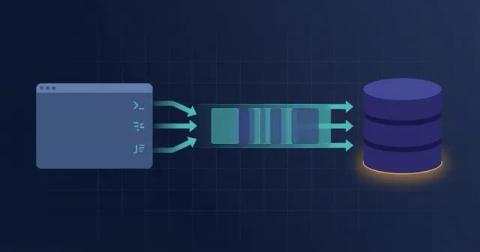
Most guidance on database replication focuses on what happens inside the pipeline: which replication strategy to use, how to handle consistency, how to monitor lag, and how to manage failover. That’s all worth understanding. But this isn’t where many replication problems start. They begin when a team realizes that one of their most important data sources can’t participate in the replication pipeline at all.

Why a Structured Mentoring Program Belongs in Your Growth Strategy

Mentoring is often seen as an informal, “nice-to-have” initiative when in reality, it can be an important part of your growth strategy. We’ve learned that when mentoring is structured, intentional, and supported, it can become an extremely effective tool that strengthens people’s skills, builds trust, accelerates development, and prepares people for bigger roles. Even our CEO mentors. When leadership models learning and teaching, it motivates people to grow.