Systems | Development | Analytics | API | Testing

Establishing a Multicloud Data Strategy for the AI Era

In my experience working with enterprise leaders, the journey to the cloud rarely follows a straight line. Many organizations set ambitious goals to move all operations to the cloud. They quickly find that certain legacy systems must remain on-premises. This reality results in a complex, hybrid multicloud environment. That means they need to adopt a new strategy for managing test data.

How to Make the Most of AI Tools for Modernization

AI tools promise speed — but what does AI modernization actually mean in practice? In this video, learn how the best AI tools can accelerate application modernization without increasing risk. We cover how AI tools analyze large legacy codebases, support refactoring, and speed up modernization—when paired with expert human oversight. You’ll learn: Whether you’re exploring AI tools or already modernizing, this video shows how combining AI acceleration with experienced engineers leads to better outcomes.

AI post-training: Finetuning using PEFT and DPO on Cloudera AMP

Post-training is rapidly becoming a critical phase of enterprise AI development. To get reliable output from an AI model, organizations must align its terminology (e.g., abbreviation) to fit their specific use cases. But getting started shouldn't require heavy computing resources—you can quickly train an open-source model right on your local device. In this tutorial, we sit down with the ASAP_DPO_Finetuning Cloudera AMP to demonstrate exactly how to align a language model to specific industry standards—in this case, Oil & Gas abbreviations.

New Zephyr Skills for Rovo: AI-powered test management in Jira | Zephyr

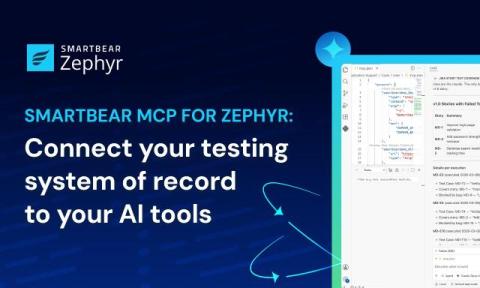
Release day shouldn't mean chasing answers across Jira. SmartBear Zephyr is the Jira-native testing system of record that empowers your team to deliver better software, faster. In this demo, see how Zephyr Skills for Rovo bring test management and automation insights directly into Jira. Connect planning, testing, and delivery in a single, unified workflow within the Atlassian system of work so your team can make faster, more confident release decisions.

Integrating AI Into Apache Kafka Architectures: Patterns and Best Practices

Adding large language models (LLMs) and artificial intelligence (AI) to real-time event streams comes down to one thing: picking the right boundary between data transport and model compute. Where you run inference determines your system's resilience, latency, and cost. This article is for data engineers, streaming architects, and developers who want to add AI capabilities to their Apache Kafka event backbone without destabilizing production consumer groups or blowing through API rate limits.

Why Real-Time Stream Processing Beats Batch ETL for AI Data Freshness in 2026

AI has evolved fast. We've gone from static, predictive models to dynamic, interactive agents. But most organizations still run data pipelines that haven't kept up. Consider what’s happening in modern AI architecture. Teams deploy high-performance engines like large language models (LLMs) and real-time fraud detectors, then feed them data that's hours or days old.

Secrets, Credentials, and the Kubernetes Attack Surface in AI Environments

Every AI workload needs credentials: cloud storage keys, model registry tokens, database passwords, and API keys for external services. How those credentials are managed in Kubernetes determines whether they stay secret or become the entry point for a serious breach. ClearML Vaults addresses this directly by separating credential ownership from credential use at the platform level. This is the second post in our four-part series on Kubernetes Security for Enterprise AI Environments.

Your AI Coding Assistant Can't See Production Errors. Here's How to Fix That.

You’ve connected your AI coding assistant to your codebase, your docs, maybe even your internal wiki. It can autocomplete functions, explain unfamiliar code, and scaffold new features. But ask it what’s actually breaking in production right now, and it has nothing. No stack traces, no error trends, no idea which deploy introduced the regression your on-call just got paged for.

Building a Secure, Scalable AI Infrastructure with Kong and Akamai: A Technical Introduction

As organizations transition from experimental AI to production-grade systems, they often face a fragmented landscape of unmanaged LLM providers, complex tool integrations, and escalating security risks. This infrastructure gap leaves AI applications vulnerable to sophisticated threats like prompt injection and data exfiltration, necessitating a unified stack that secures the edge while streamlining the data plane..

Why RBAC Isn't Enough: Real Tenant Isolation in Kubernetes AI Environments

Role-based access control is essential, but it’s not isolation. When multiple AI teams share a Kubernetes cluster, RBAC controls what they can do; it doesn’t control what they can reach, what they can see, or what happens when something goes wrong in a neighboring workload. This is the first post in our four-part series on Kubernetes Security for Enterprise AI Environments.