Consuming APIs in Laravel with Guzzle
APIs are everywhere! In this article, you'll learn how to consume external APIs in Laravel using Guzzle.


APIs are everywhere! In this article, you'll learn how to consume external APIs in Laravel using Guzzle.
When using a testing tool, it is only logical to trust its results. And the more well-known the tool is, the more trust we put in it. Furthermore, how could we know it is wrong? After all, who is in a position to judge the judge? This phenomenon is particularly true in the load testing community, since the field is still something of a niche among the testing world. Finding deep-dive studies about the actual technical aspect of load testing is difficult.
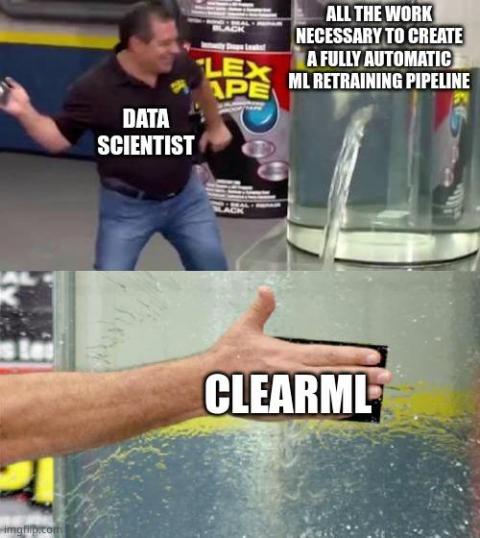
Fully automatic retraining loop using ClearML Data Right, so you want to create a fully automatic retraining loop, that you can set up once and then pretty much forget about. Where do we even start?!
You’ve developed an amazing API product. Fantastic. But that’s just the beginning of your journey. Starting an API-first company brings with it a whole host of unique challenges for you to face along the way. Based on Moesif’s own experience of founding an API-first company, we’ve shared some insights below to help you avoid some of the pitfalls and make the most of the opportunities that lie before you. “API-first” can mean different things to different people.
For more details on each of the points, read the article below. After successfully building and testing your iOS app on Codemagic, you may want to upload the build to TestFlight or App Store. Sometimes, you may face a crash that did not happen locally but only when you release the app to your users, either on TestFlight or App Store, making it difficult for you to understand the core problem behind the crash.
Corporations are generating unprecedented volumes of data, especially in industries such as telecom and financial services industries (FSI). Many organizations are hoping to leverage these massive amounts of data by investing heavily in big data solutions – solutions that they hope can meet business goals such as increasing customer satisfaction, uncovering alternative revenue streams, or improving operational efficiency.
Data governance was an exclusive set of skills and tools based on old-school rules until a few years ago. Today, that's changed. While people who manage data still need tools, rules, and protocols to control and secure data use and sharing, three major trends have transformed the data ecosystem. First, the explosion of data from many nontraditional sources (personal devices, sensors, social data, etc.) provided businesses with massive and unprecedented information to dig for insight.
Releasing high-quality products is crucial for developers and QA teams. At SmartBear, we’re always looking for ways to improve the software development lifecycle. We want to help developers and QA teams make the best use of their time before releasing products. Testing web or mobile applications ensures rich, robust functionality. With BitBar, your application works.