Systems | Development | Analytics | API | Testing

5 Tips For Recovering Revenue With APIs

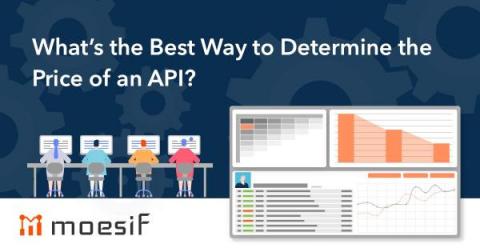
Recovering revenue is an important part of running a successful venture in the modern API economy. With an API product it can be easy to undervalue your services and, ultimately, your business. This is why many API providers turn to billing customers for their usage, but which API monetization method is best for your product stack? Moesif enables you to make smart, informed decisions around your customers and maximize the monetization of your business model.

FastAPI - From Docs to OpenAPI Specs and Contract Tests in a Flash

After creating or editing documentation, use FastAPI with Sauce Labs to easily auto-generate (or update) OpenAPI spec files, API mock servers and bidirectional contract tests. Sauce Labs checks both the OAS spec file and the API's provider and consumer contract. Extend contract tests easily into automated API functional and load tests for your CI/CD pipeline. Reuse API tests as holistic functional performance monitors that give highly usable feedback and fast debugging in any environment.

Jenn Bergstorm on Innovations Through Gamification | Kongcast Flash | #KongSummit2022

On this episode of #Kongcast Flash, Jenn Bergstrom, Senior Technical Director, Parsons X - introduces her #KongSummit2022 talk: Building a Culture of Innovation Through Gamification. By attending her session, you will learn l how leaders can build a culture that embraces innovation through activities such as hackathons, capture-the-flag cyber events, Kaggle-like competitions, and other gamified learning events.

Real-time Event Streaming For Customer Data | RudderStack

In this episode of “Powered by Snowflake,” host Daniel Myers sits down with RudderStack’s Head of Customer Engineering, Lewis Mbae. RudderStack helps customers ingest, transform, and integrate data into the Data Cloud. This conversation covers the value of the Data Cloud as a central source of truth, the challenges of building an enterprise-grade customer data platform, empowering data engineers, and more.

Data Mesh Architecture Through Different Perspectives

We previously wrote how the data mesh architecture rose as an answer to the problems of the monolithic centralized data model. To recap, in the centralized data models, ETL or ELT data pipelines collect data from various enterprise data sources and ingest it into a single central data lake or data warehouse. Data consumers and business intelligence tools access the data from the central storage to drive insights and inform decision-making.

DataOps Observability: The Missing Link for Data Teams

As organizations invest ever more heavily in modernizing their data stacks, data teams—the people who actually deliver the value of data to the business—are finding it increasingly difficult to manage the performance, cost, and quality of these complex systems. Data teams today find themselves in much the same boat as software teams were 10+ years ago. Software teams have dug themselves out the hole with DevOps best practices and tools—chief among them full-stack observability.

Adverity is Powered by Snowflake-and Moving into New Markets with Confidence

What’s harder than finding the right data architecture? Finding the right dedicated partner. Adverity gets both with Snowflake. Learn how the two organizations are moving into new markets and supplying even more reliable marketing data to Adverity customers. When a fast-growing SaaS business looks to expand its client base, it normally encounters two major challenges: In many cases, an external data solution provider can only help solve the scalability challenge.

Why is Customer Feedback so Important for the FinTech Industry?

Some time ago, we covered the key metrics that a Product Manager in a fintech organization should make a top priority when determining their KPIs, breaking them down into five groups: Session-based data, Customer Feedback, Technical Metrics, Action Stats, and Revenue. With that in mind, we conducted a series of surveys on LinkedIn, asking PMs in the fintech industry which of those groups were the most important for them while running digital product analytics.