Systems | Development | Analytics | API | Testing

Storing Ephemeral UI State with Kredis for Rails

Kredis (Keyed Redis) is a recent addition to the Rails developer's toolkit. It strives to simplify storing and accessing structured data on Redis. In this first part of a two-part series, we'll start by going into how Kredis works. We'll then run through an example use case for storing ephemeral UI state using a bespoke Redis key. Let's get started!

Python Environment Variables

As a modern application, yours always deals with credentials, secrets, and configurations to connect to other services like an authentication service, database, cloud services, microservices, etc. Keeping your username, password, and other login information in the source code of your application is not a good idea because they could be exposed if you share or publish the programme. Before sharing the code, you must delete or remark the credentials, which requires more work from you.

The Snowflake Telecom Data Cloud

As Snowflake rolls out its new Telecom Data Cloud, “Data Cloud Now” host Ryan Green sits down with Phil Kippen, Global Head of Industry, Telecom, at Snowflake, to discuss what it all means for telecom service providers. During the interview, Kippen notes that the arrival of 5G creates new market opportunities but also new operational complexities for telecom service providers as they take on the task of rolling out new services and managing new infrastructure. He explains that the rollout of the Telecom Data Cloud will help companies achieve operational efficiencies by providing a single, unified platform across all domains and business functions within the telecom service provider environment and across all clouds. In addition, Snowflake will help service providers create a new marketplace that will enhance their ability to find new ways to monetize their data and applications and will help them work with partners across the telecom ecosystem to develop new opportunities for collaboration and data sharing.

Implementing and Using UDFs in Cloudera SQL Stream Builder

Cloudera’s SQL Stream Builder (SSB) is a versatile platform for data analytics using SQL. As apart of Cloudera Streaming Analytics it enables users to easily write, run, and manage real-time SQL queries on streams with a smooth user experience, while it attempts to expose the full power of Apache Flink. SQL has been around for a long time, and it is a very well understood language for querying data.

Snowflake's Phil Kippen Weighs In on Launch of the Telecom Data Cloud

Today Snowflake is officially launching the Telecom Data Cloud. Snowflake’s newest Data Cloud helps telecommunications service providers break down data silos within the business and across the ecosystem, allowing organizations to easily and securely access data in near real time, enrich it with machine learning models, and then share and analyze it to drive better decision-making.

Reverse ETL - A Must-Have for Modern Businesses?

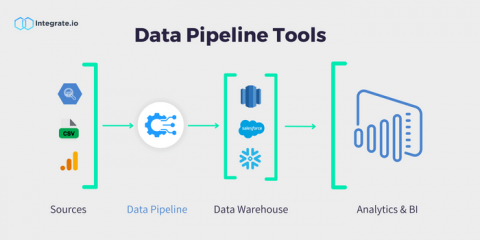
Extract, Transform, Load (ETL), and Extract, Load, Transform (ELT) pipelines are standard data management techniques among data engineers. Indeed, organizations have long been using these processes to create effective data models. However, there has recently been a remarkable rise in the use of Software-as-a-Service (SaaS) based customer relationship management (CRM) apps, such as Salesforce, Zendesk, Hubspot, Zoho, etc., to store and analyze customer data.

AIOps Observability: Going Beyond Traditional APM

AIOps is an emerging technology that applies machine learning and analytics techniques to IT operations. AIOps enables IT teams to leverage advanced algorithms to identify performance issues, predict outages, and optimize system performance. Nodesource sees significant advantages for developers and teams to increase software quality by leveraging AIOPS.

The Evolution from DevOps to DataOps

By Jason Bloomberg, President, Intellyx Part 2 of the Demystifying Data Observability Series for Unravel Data In part one of this series, fellow Intellyx analyst Jason English explained the differences between DevOps and DataOps, drilling down into the importance of DataOps observability. The question he left open for this article: how did we get here? How did DevOps evolve to what it is today, and what parallels or differences can we find in the growth of DataOps?