Systems | Development | Analytics | API | Testing

Predictive Analytics in Clinical Decision-Making: From Alerting to Anticipating

This has been the reality of clinical decision-making for years: healthcare reacts after the signal becomes visible. Traditional clinical decision support systems helped standardize care and reduce errors, but most systems relied on static rules and issued alerts only after an event had occurred. They identify danger when it is already happening, not when it is quietly forming underneath the surface. That delay is expensive clinically, operationally, and financially.


Is BI dead? No, but the game has changed. A lot.

AI is reshaping many industries and tools at breakneck speed. Business Intelligence is no exception, but things might not end up in a way you might expect. There’s still hope for BI and vendors that manage to embrace, rather than try to fight the AI tsunami. You are an executive looking for answers. Before, in order to get them you had to reach out to your analysts, or external agencies, or try to make sense of broken dashboards set by people who have left the company years ago.

Why Modern Teams Need a Bridge Between Open Source and Enterprise Performance Testing

Modern performance testing is evolving beyond the traditional choice between enterprise platforms and open-source tools. Teams increasingly need the flexibility of JMeter, k6, Gatling, or Locust combined with enterprise-grade reporting, scalability, security, and support. A new generation of platforms helps reduce operational complexity, lower total cost of ownership, and accelerate adoption through AI-assisted workflows and simplified onboarding.

Qlik and Starburst: The Data Architecture Choice That Unlocks Enterprise AI

There's a pattern we see repeatedly in enterprise AI projects. A team identifies a compelling use case. They build the model. They staff the project. Then they spend the next six to eighteen months trying to solve a problem that was never on the roadmap: their data isn't ready. Not because it doesn't exist. It exists everywhere: in cloud warehouses, on-premises databases, SaaS platforms, and data lakes across multiple regions.

Sauce Labs Adds AI-Driven Test Automation Solution to IBM watsonx Orchestrate Catalog

New Sauce Labs Real Device Cloud Agent — available now in the watsonx Orchestrate Agent Catalog — can enable enterprise teams to trigger real-device tests, manage fleets, and validate app quality using natural-language commands.

Advanced iOS push notifications: scaling APNs in production

The Apple Push Notification Service (APNs) allows developers to send real-time alerts and data to Apple devices. But it can create a number of problems as your app scales including silent throttling, deep link errors and push payload incompatibility. This post will help you proactively avoid these issues. You’ll learn about: This guide is intended for developers already using push notifications or planning to operate notification systems at scale.

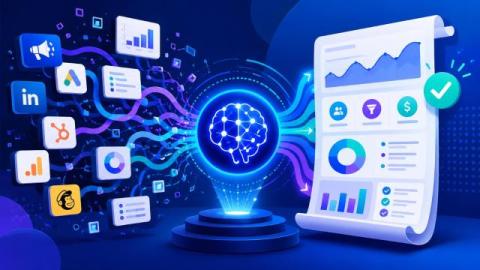
How to Run a Campaign Post-Mortem With AI: A Worked Example

A marketing director sits down ten days after her campaign closed. Six browser tabs are open: LinkedIn Ads, HubSpot, GA4, Mailchimp, an attribution spreadsheet, and a blank doc that is supposed to become the post-mortem narrative. The meeting is in two hours. She knows something broke in the middle of the funnel (pipeline came in below target), but she cannot prove where or why until she reconciles numbers across all six sources.

Gherkin Software Testing: Syntax, Best Practices, and Pitfalls

Gherkin software testing turns plain-English specifications into executable tests your whole team can read, but only when you stop treating it like a scripting language. If your feature files read like step-by-step UI scripts, you're doing BDD testing backward. Here's how to fix that.