Seven essential database schema best practices
Your database schema is the foundation for everything you do with data. Learn our essential best practices in our complete guide.


Your database schema is the foundation for everything you do with data. Learn our essential best practices in our complete guide.
Serverless computing is an exciting alternative to hosting apps on the AWS cloud. In this four-part series, we’ll run through how to build AWS Lambdas with TypeScript, improve the dev experience, optimize it, and finally, use AWS Cognito for security. In this take, I would like to take you on a journey to explore AWS Lambdas using TypeScript. We will build a pizza API, use Claudia to help deploy the app, and use the AWS CLI tool to set up a DynamoDB database.
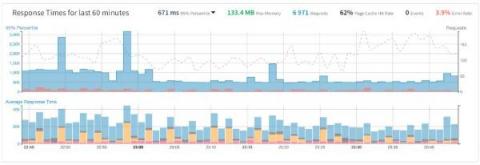
An application monitoring tool (APM) is not just useful for seeing how your application performs through graphs and visuals. We can go deeper and use an APM to understand how your application behaves in a certain environment. As developers, we should aim to be less reactive to errors and more predictive, avoiding crashes for end-users. One way to accomplish this is by using monitoring tools to debug our application when an error occurs.
WSO2, a leading fully open source API Management solution provider, today announced that Forrester has recognized WSO2 as a Strong Performer in The Forrester Wave™: API Management Solutions, Q3 2022. WSO2 received the highest possible scores in the commercial model and supporting services criteria. The report can be accessed here.
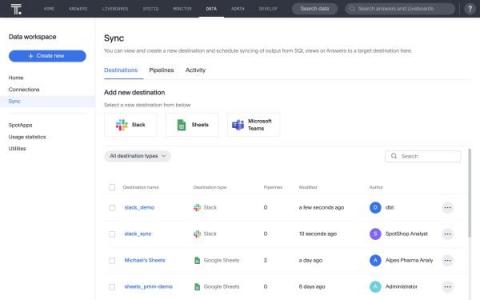
Every data team wants to make insights more actionable for frontline business users. The only question is how. You know they spend the majority of their time in business-critical tools like HubSpot, Slack, and Microsoft Teams. So why not bring the data-driven insights created in ThoughtSpot to the apps they use most? With ThoughtSpot Sync, you can. Starting today, ThoughtSpot customers will be able to send insights directly from ThoughtSpot to Google Sheets, Slack, and Microsoft Teams.
In this post we post a comprehensive list of all the features that we have worked on over the last 3 months.
We are going to discuss how we can test the Lightweight Directory Access Protocol (LDAP) using JMeter, the principles of LDAP can be quite complicated as their origins come from the X500 specification which documents a suite of protocols developed by the International Telecommunication Union in the 1980’s.