Systems | Development | Analytics | API | Testing

Why elasticity is essential for delivering realtime updates at scale

Elasticity – the ability of software infrastructure to adapt and scale to fluctuations in usage – is an essential part of realtime updates. Elasticity is not a new problem but for realtime update systems, the challenge is different in two major ways: In a previous article, we walked through the fundamentals that comprise a successful realtime update infrastructure.

No-Code Data Pipelines: Streamline Data Integration

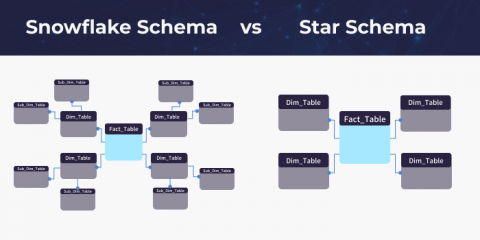
Historically, connecting multiple data sources to a single destination required extensive experience as a computer programmer or data scientist. Today’s no-code data pipelines have changed that perspective. Now, practically anyone – even those without any coding experience – can use no-code pipelines to streamline data processing without damaging data quality. You will, however, need the right ETL and ELT tools to manage real-time data flows.

Introducing StudioAssist Katalon's GPT-Powered Test Development Assistant

Introducing StudioAssist, a next-generation AI-powered coding companion designed to streamline your Studio programming workflow and empower you to develop test automation code like never before. Leveraging the power of GPT and Katalon Studio, this innovative tool provides context-based code suggestions as well as the ability to provide detailed descriptions of existing code.

Scaling realtime messaging for live chat experiences: Challenges and best practices

Live chat is the most common type of realtime web experience. Embedded in our everyday lives, we use messaging platforms like WhatsApp and Slack daily to keep in touch with friends and family, and to communicate and collaborate at work. With live chat functionality also prominent across e-commerce, live streaming, and e-learning experiences, end users have come to expect (near) instant message receipt and delivery.

Back-end application hosting made easy

For the day-to-day developer, deployment and hosting, plus the subsequent management of solutions in production, is a considerable challenge, especially if it’s outside their immediate skill set. Hosting applications can be complex. Besides the obvious challenges of scalability, security, and reliability (up-time), you must consider where your application will be hosted, how you plan to deploy it, how to monitor it, and more.

End-to-end gRPC and HTTP/2 support: a story about ALPN, Edge, and Kuma/Envoy

Need to deploy APIs and full-stack apps with gRPC and HTTP/2 support? Sign up now to deploy with our free tier and choose your preferred protocol in the control panel or via the CLI. Our thing is to let you deploy your apps globally in less than 5 minutes - and with high-end performance. Not only does this require us to be meticulous about everything composing our infrastructure layer, but also we have to support high-level protocols like WebSockets, HTTP/2, and gRPC.

How to Make a Prototype of an App: A Comprehensive Guide

Usually, when clients come to us with an idea for developing a feature-rich mobile app, they might find it a little difficult to comprehend the workflow and the importance of specific stages. Therefore, one frequently asked question we usually face is, ‘Is it necessary to work on a prototype?’ Well, the answer to this frequently asked question is an ABSOLUTE YES and cannot be overlooked in any part of the development phase.