Research on COVID-19 is being produced at an accelerating rate, and machine intelligence could be crucial in helping the medical community find key information and insights. When I came across the COVID-19 Open Research Dataset (CORD-19), it contained about 57,000 scholarly articles. Just one month later, it has over 158,000 articles. If the clues to fighting COVID-19 lie in this vast repository of knowledge, how can Qlik help?
Over the last 100 years alone, artificial intelligence has achieved what was once believed to be science fiction: cars that drive themselves, machine learning models that diagnose heart disease better than doctors can, and predictive customer analytics that lead to companies knowing their customers better than their parents do. This machine learning revolution was sparked by a simple question: can a computer learn without explicitly being told how?
Once upon a time, we had these giant structures where thousands of people would congregate to share ideas, pamphlets filled to the margins with buzz words and cheap, branded t-shirts. Yep, tech conferences – oh what a relic of the past that I miss. It used to be part of my job to attend these.
A majority of front-end developers deal with this buzzword all the time: V8. A big part of its popularity is due to the fact that it led JavaScript to a new level of performance. Yes, V8 is very fast. But, how does it perform its magic and why is it so responsive? The official docs state that “V8 is Google’s open source high-performance JavaScript and WebAssembly engine, written in C++. It is used in Chrome and Node.js, among others”.
In the third episode of our podcast, Mobile DevOps is a thing! , we talk to John Sundell. Join us as we discuss how mobile teams can level up their skills and benefit from test automation and continuous delivery.
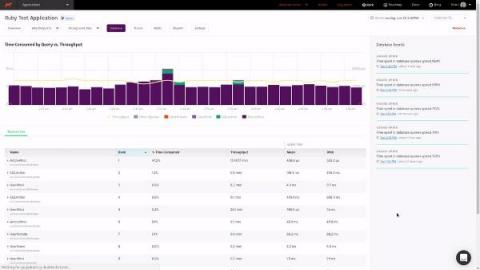
Most modern web applications are heavily reliant on persisting data with relational databases, and so it’s no surprise that a large part of application performance monitoring relates to keeping an eye on database performance to ensure that our SQL queries are as efficient as possible. With this in mind, Scout features a Database Addon module, and in this video we are going to take a closer look at what it has to offer.